
There’s a phrase that gets thrown around a lot in wellness spaces: listen to your body. However, many Black and African women are raised to absorb, endure, and carry on while the body takes the hit. We just weren’t taught to listen. Nowhere is that conversation more visible and more difficult to ignore than on our skin.
That breakout that appears the morning before a big presentation, the dullness that settles in after weeks of hustling, or that flare-up that arrives right on cue when everything else in life is falling apart. They are not all coincidences.
What Actually Happens Under the Surface
When your body encounters stress, it activates what scientists call the hypothalamic-pituitary-adrenal (HPA) axis. The result is a surge of cortisol, the body’s primary stress hormone. Cortisol increases oil production in the skin, which can clog pores and cause breakouts, but doesn’t stop at acne.
Cortisol also disrupts the skin barrier, decreasing the content of lipids and structural proteins in the epidermal layers— the very things that keep skin protected and hydrated. The result is increased water loss and compromised skin integrity. In plain terms, stressed skin is dehydrated, more reactive, slower to heal, and more prone to inflammation. For melanin-rich skin that’s already predisposed to post-inflammatory hyperpigmentation, that inflammation doesn’t just pass. It leaves a mark, sometimes for months.
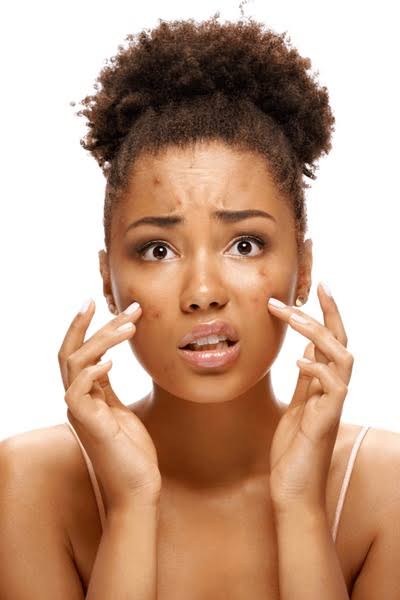
Research has also linked chronic psychological stress to conditions like psoriasis, atopic dermatitis, vitiligo, and acne, all triggered through the release of cortisol and epinephrine. This is the brain-skin axis at work, which depicts that what lives in the mind eventually surfaces on the face.
The Weight We Were Taught to Carry
The “Strong Black Woman” scheme is not just a cultural trope. It is a survival mechanism with roots in generations of Black women having no choice but to be unbreakable. Cultural schemes like that promote emotional suppression and overextension, often leading Black women to place the needs of others consistently above their own. In Nigeria, it shows up as the woman holding the home together while building a career, supporting extended family, and presenting effortlessly through all of it. In the UK, it’s the Black woman in the boardroom who cannot afford to be seen as anything less than composed.
There is a particular kind of exhaustion that comes from never being allowed to be tired. From being the one everyone calls, to holding it together so seamlessly that nobody thinks to ask if you are okay. The stress Black women carry is not just personal; it is the accumulated weight of navigating racism and gender bias at work, of being the financial backbone of extended families, of showing up fully in spaces that were not built with you in mind. That load doesn’t clock out at 6 pm. It follows you home, sits with you at dinner, and keeps your nervous system running hot long after the day is done. The cortisol doesn’t know the difference between a difficult meeting and a moment of rest because, for many women, real rest is something we haven’t quite figured out how to allow ourselves yet.
Stress Looks Different on Us
Across Lagos and London, the presentation of chronic stress on darker skin tones carries its own specific signature. Where a white woman might flush or redden under stress, melanin-rich skin tends to respond with breakouts concentrated along the jawline and chin, uneven texture, and stubborn dark spots that linger long after the initial flare has resolved.
The humidity and heat of Lagos create an environment where excess sebum production, already elevated under stress, compounds quickly. Meanwhile, Black British women navigating colder, drier climates face a different challenge: a stress-weakened barrier that strips moisture from skin already fighting against the elements. Same internal trigger, different external conditions, different skin outcomes. A one-size-fits-all approach to stressed skin was never going to work for us.
What to Actually Do About It
Fortify your barrier first
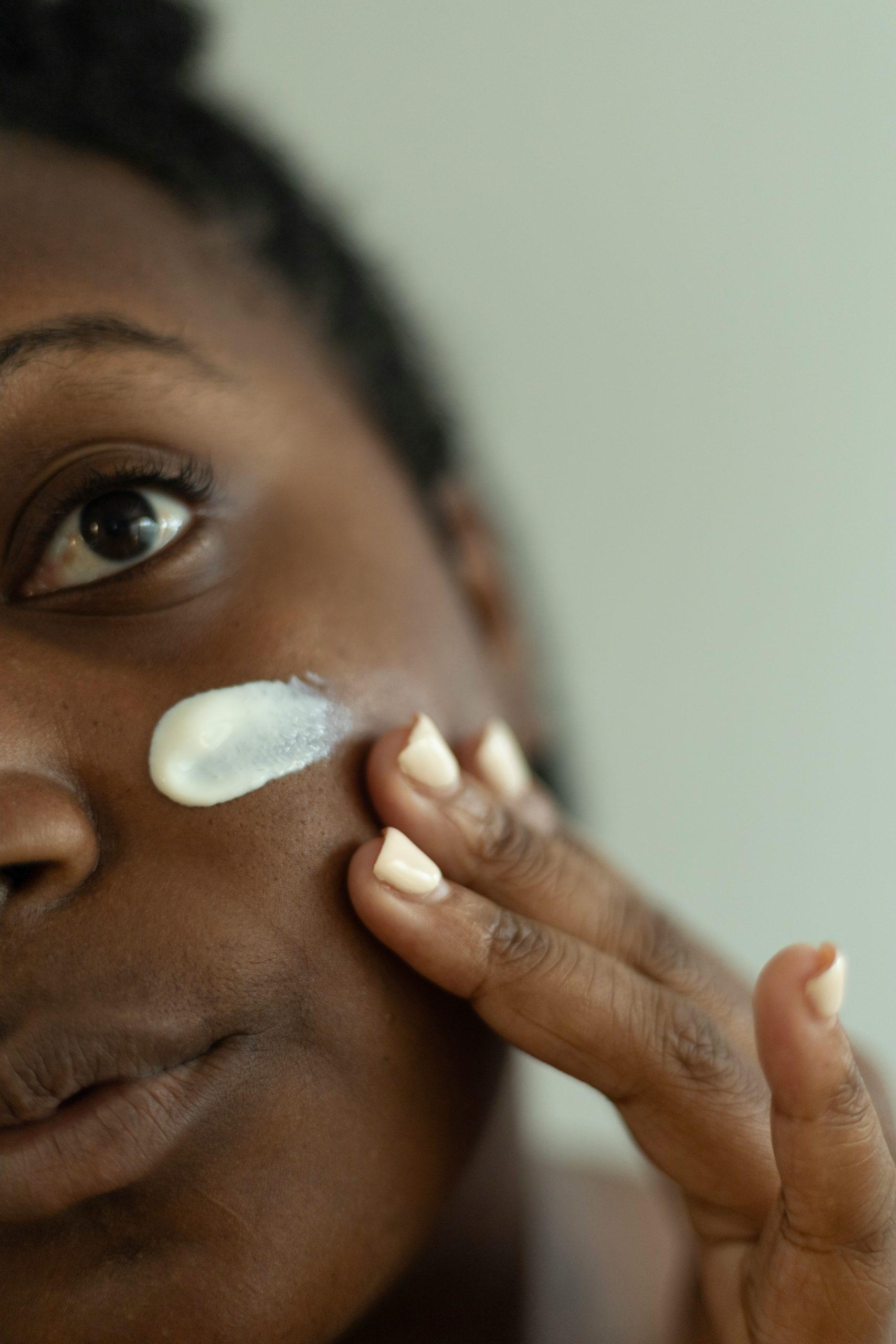
When cortisol is high, the skin barrier is compromised. Reach for ingredients that rebuild it: ceramides, niacinamide, and hyaluronic acid. Apply morning and night, consistently, even when skin seems calm.
Treat inflammation without adding to it
Resist the urge to attack stress breakouts aggressively. Harsh exfoliants and strong actives on already-inflamed, melanin-rich skin are a fast route to hyperpigmentation. Instead, use a low-concentration niacinamide serum to calm redness and regulate oil without irritating the barrier.
Don’t skip SPF when you’re stressed
UV exposure worsens the dark spots that stress breakouts leave behind on deeper skin tones, and yet SPF is the step most likely to be abandoned during a hectic period. Sunscreen remains one of the best options available, and it takes ten seconds to apply.
Slow the routine down intentionally
There’s real evidence that even brief mindfulness practices lower cortisol levels. Your skincare routine, two minutes, morning and night, can double as that moment of pause. Not as a productivity hack, but as a genuine act of attention to yourself.
Beyond the Bathroom Cabinet
The truth is, no serum fixes a life that isn’t resting. Here are a few things that actually move the needle on cortisol, none of which require a skincare budget.
Learn to say no without a paragraph of explanation
Chronic stress in Black women is often tied to overcommitment to work, family, and community. Saying no is not abandonment; it is resource management. Your energy is finite; treat it accordingly.
Move your body, but gently
High-intensity workouts can temporarily spike cortisol, the last thing stressed skin needs. Low-intensity movement like walking, yoga, or even dancing around your kitchen has the opposite effect, lowering cortisol and improving mood. Twenty minutes is enough.
Sleep like it’s your job
Skin repairs itself between 10 pm and 2 am, during the deepest stage of sleep. Cortisol levels also reset overnight, but only if you actually sleep. Chronic sleep debt keeps cortisol elevated even on calm days. If your schedule is the problem, the schedule needs to change.
Talk to someone
Therapy remains deeply stigmatised in many Nigerian and Black British communities, but the tide is slowly shifting. There are several platforms that are building culturally competent spaces specifically for Black women. You don’t have to be in crisis to benefit from having somewhere to put things down.
Reduce the noise
Doomscrolling and constant social comparison keep the nervous system in a low-grade state of alarm. Even a thirty-minute phone break before bed changes your cortisol profile the next morning. Your skin will notice before you do.
The Real Work
Skincare can soften the symptoms. But the deeper thing that actually changes what our skin is responding to is permission. Permission to not always be okay. Permission to ask for help. Permission to be a full, complex, sometimes struggling person without it being a failure of character.
Psychiatrist Inger Burnett-Zeigler, who has spent two decades working with Black women on stress and trauma, puts it plainly: “Feeling sad, anxious, worried and stressed out all the time does not have to be your norm.”
Your skin has been trying to tell you the same thing for a while. The question is whether you’re ready to listen.