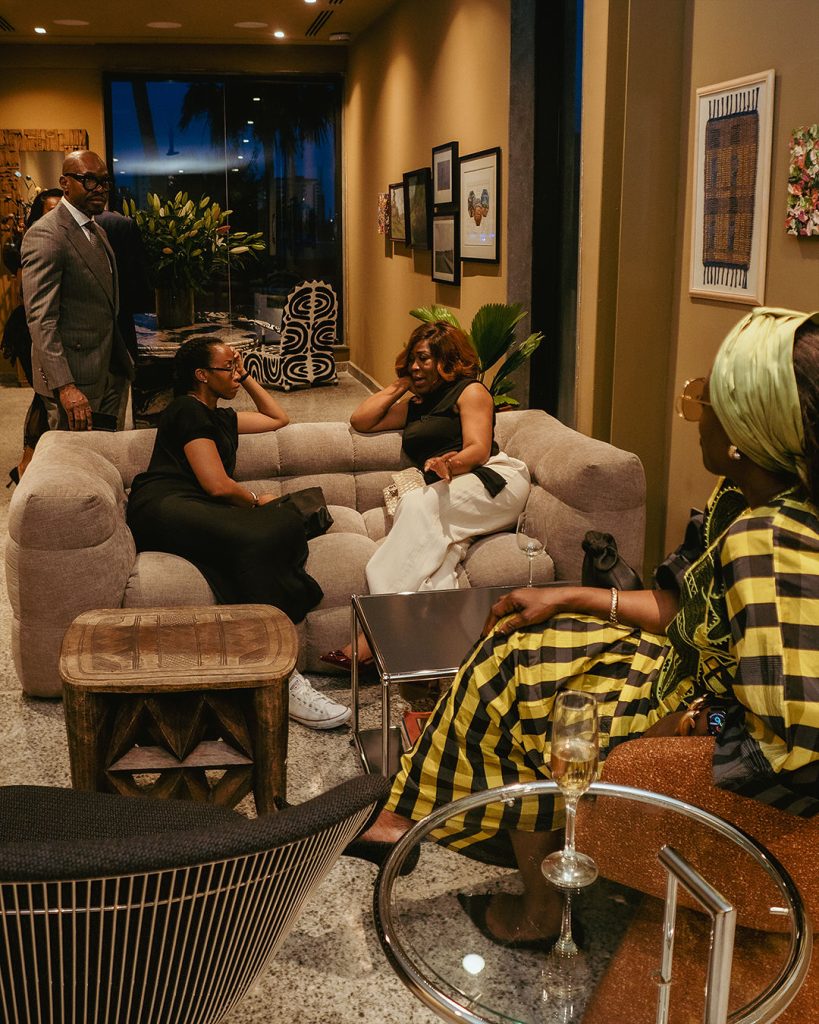
Guests engaged in a conversation in the Magic Room | Cr.: Dowkitstrim Image
Mbari Kola is a private arts society and boutique cultural institution that houses a gallery, research library, residency, foundation, members’ lounge, and multidisciplinary programming under one roof in Ikoyi, Lagos.
At a time when African cultural production is receiving unprecedented international attention, institutions built to sustain art and culture locally remain rare. Mbari Kola represents a long-term investment in the cultural infrastructure of the continent itself; a place designed not only to showcase creativity but also to nurture the ecosystems, conversations, and communities that allow it to endure.
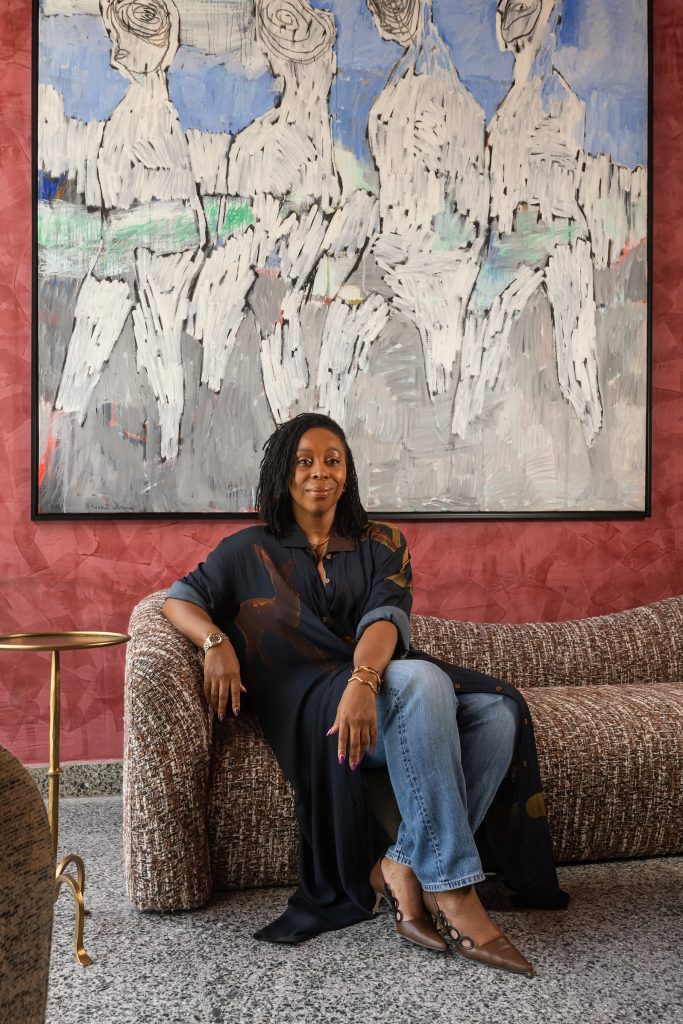
Mbari Kola is founded by Ugoma Ebilah, curator, patron, cultural strategist, and founder of Bloom Art. For almost two decades, Ebilah has worked across the ecosystem of African art, supporting artists, advising institutions, building collector networks, and contributing to the preservation and circulation of Nigerian modern and contemporary art. Mbari Kola extends that work into a permanent institution.
Ugoma Ebilah
“Mbari Kola is a vision I have been building since 2016 through every exhibition, every artist collaboration, and every effort to bring collectors closer to more responsible, meaningful patronage.
Over the years, one thing has become increasingly clear: Nigeria produces some of the most significant art in the world yet lacks a permanent home for the dialogue around it. There has been no sustained space for education, gathering, or the kind of community that holds culture in active conversation and accountability.
That gap has remained unresolved for too long. Mbari Kola responds directly to that need. It creates a permanent space for exhibition, learning, and cultural exchange. It has been a long time coming, and it is only the beginning.”
— Ugoma Ebilah, Founder, Mbari Kola
The institution takes its name from the Mbari Artists and Writers Clubs founded in Ibadan and Oshogbo in the 1960s, seminal post-independence cultural collectives that shaped a generation of African artists, writers, and intellectuals, including Wole Soyinka and Chinua Achebe.
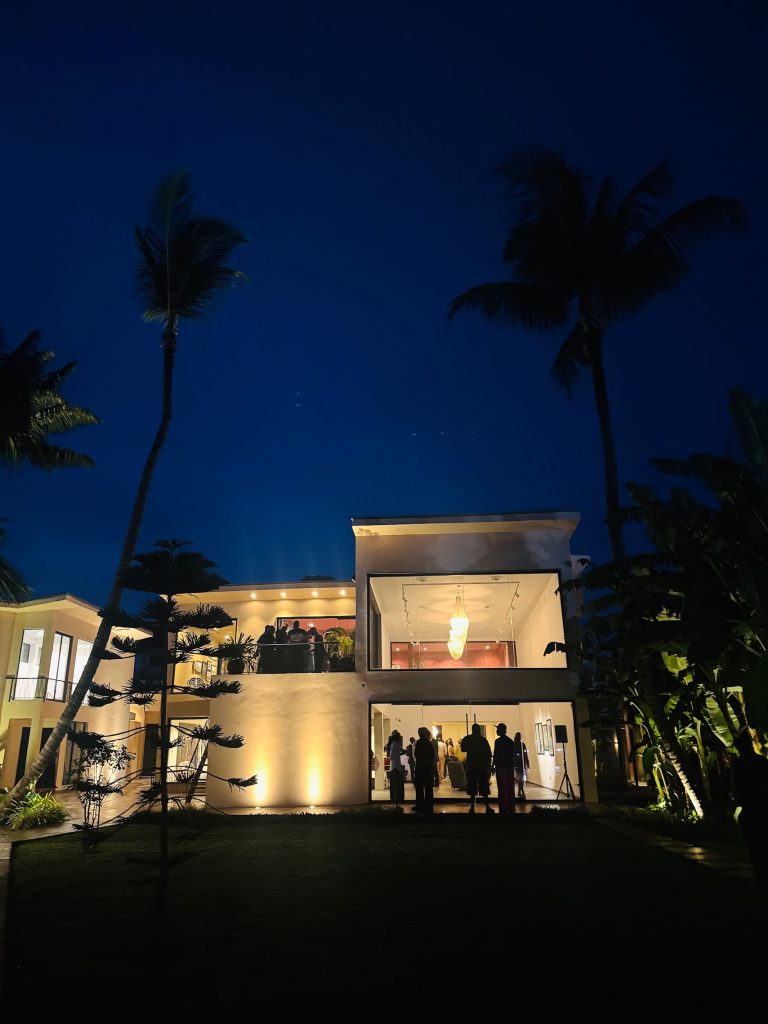
Mbari Kola terrace at night | Cr.: Dowkitstrim Image
Designed by architect Kelechi Odu, the house draws on principles of Nigerian modernism, domestic spatiality, and the social architecture of the original Mbari movement. Every room has been designed to encourage overlap between disciplines, generations, and ways of thinking.
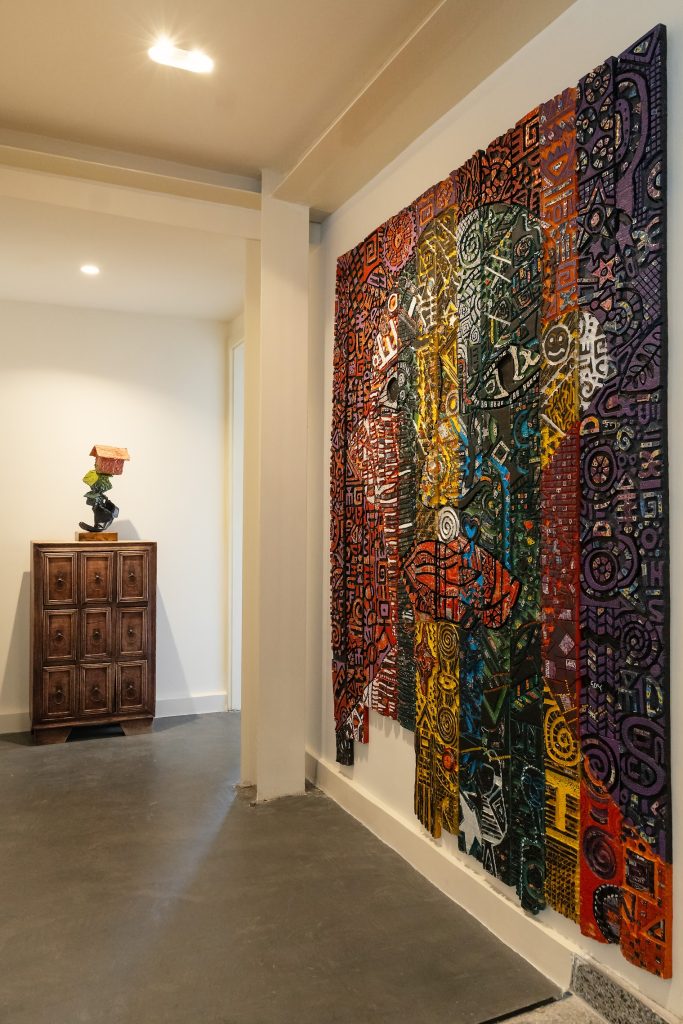
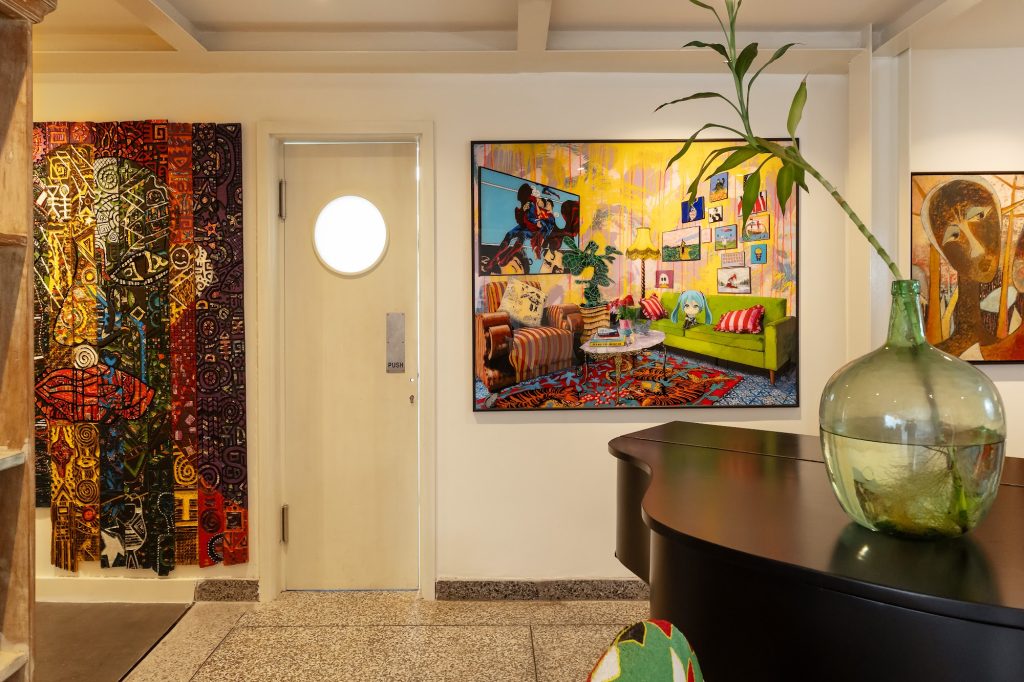
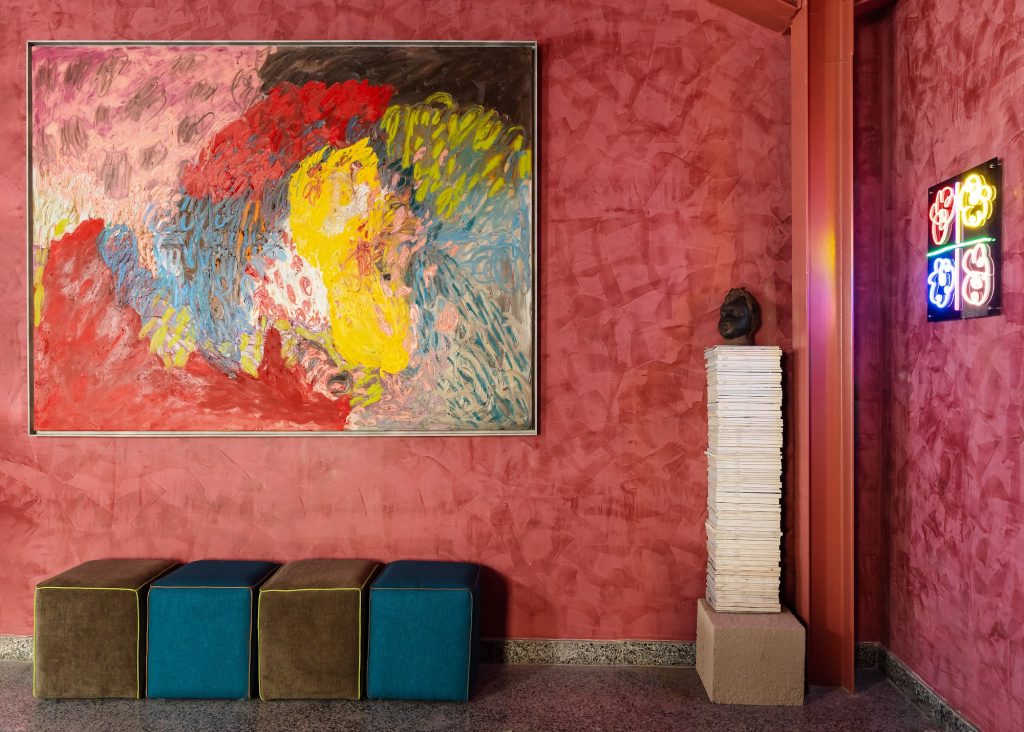
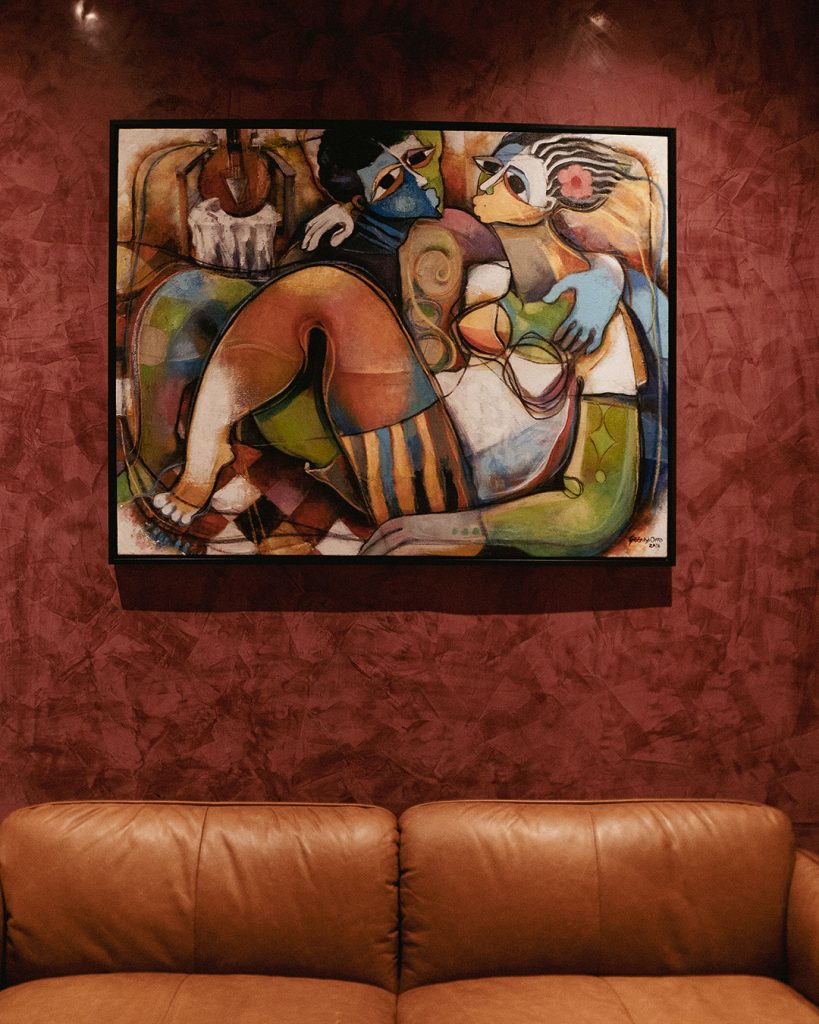
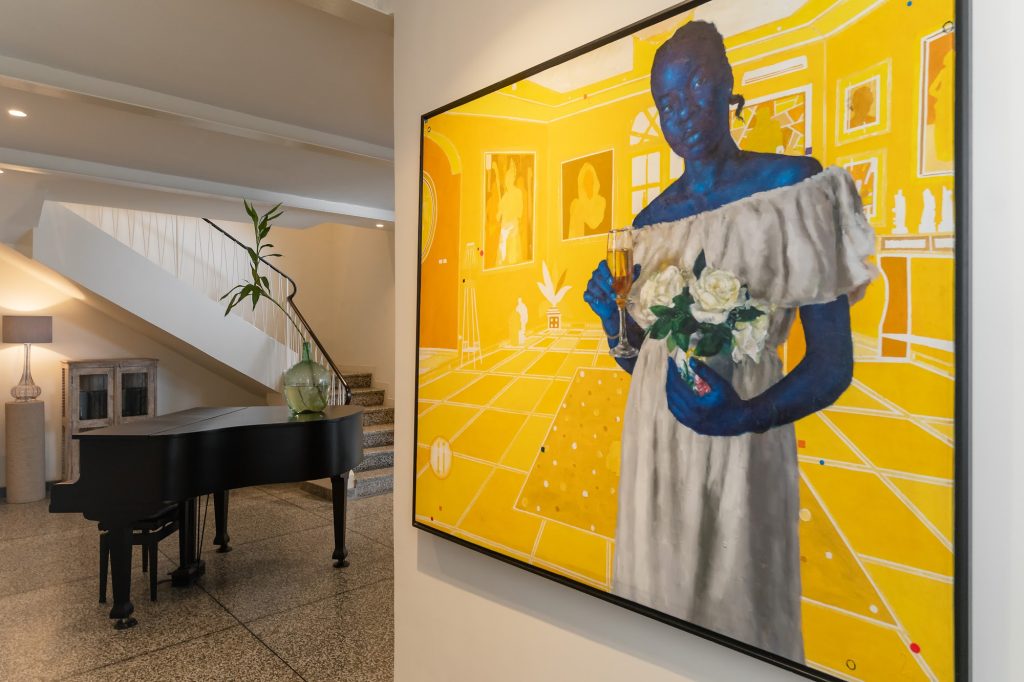
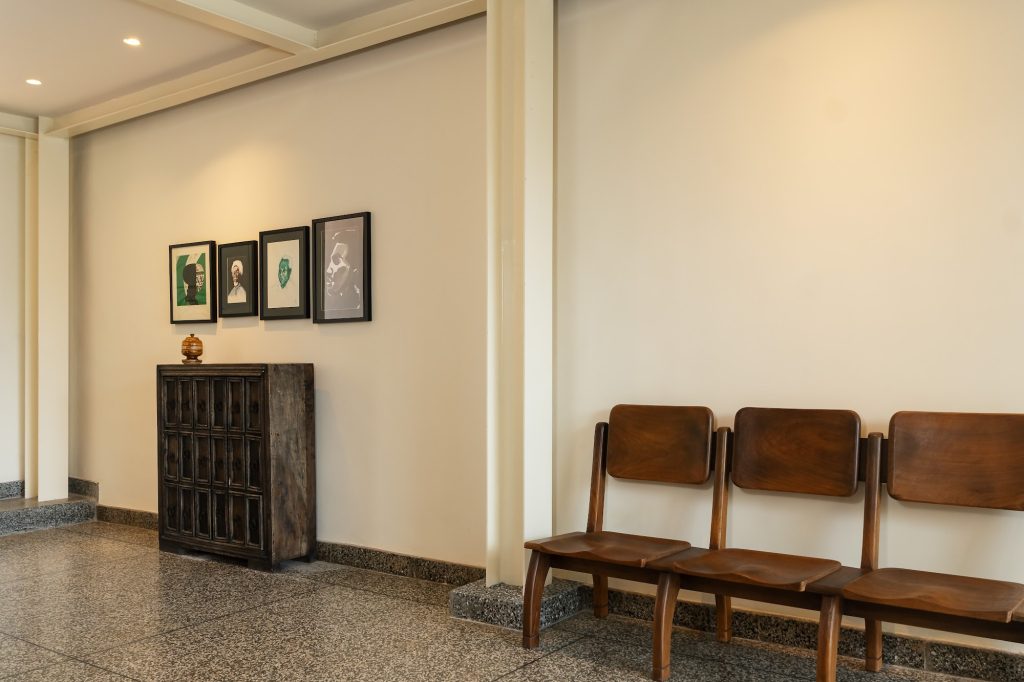
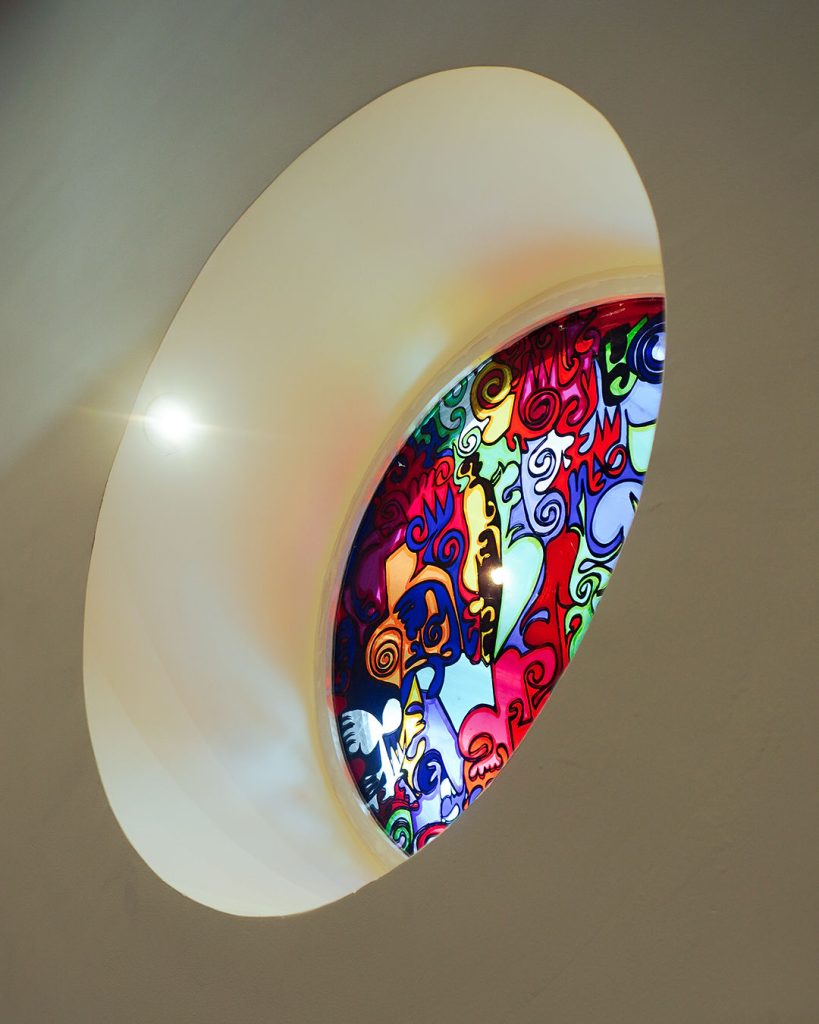
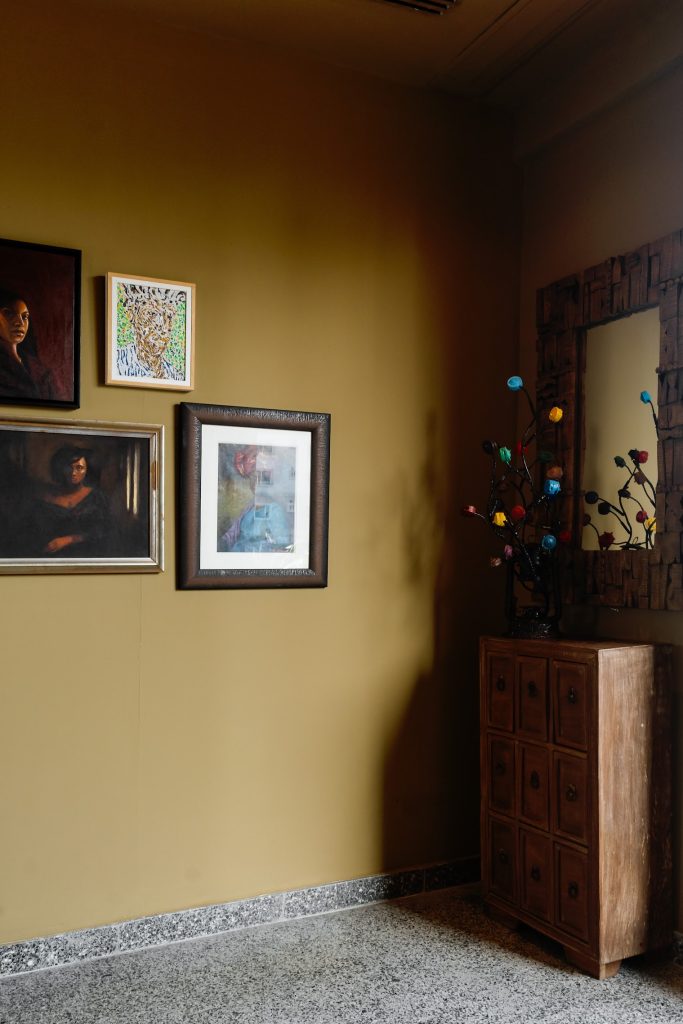
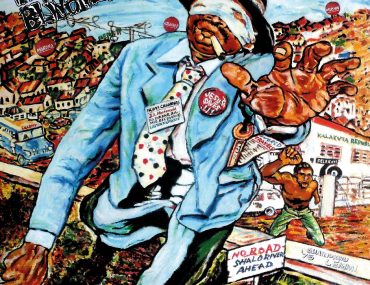
The interiors deepen this philosophy through a careful layering of architecture, art, furniture, and material memory. Original terrazzo floors were preserved and extended by local craftsmen still practising the near-extinct technique. Throughout the house, works by artists including Muraina Oyelami, Victor Ehikhamenor, Obi Okigbo, Raji Babatunde Mohammed, Gerald Chukwuma, and Norman O’Flynn, sit alongside found and inherited pieces, with lobby seating by Demas Nwoko, one of Nigeria’s most notable modernist artists, designers, and architects. The result is a space that feels both institutional and domestic: a cultural house where every design decision supports gathering, looking, reading, conversation, and discovery.
A piece of art by Eilen Mena on the wall of The CommonsA piece of art by Gbenga Offo hanging in The CommonsCr.: Tolulope Sanusi
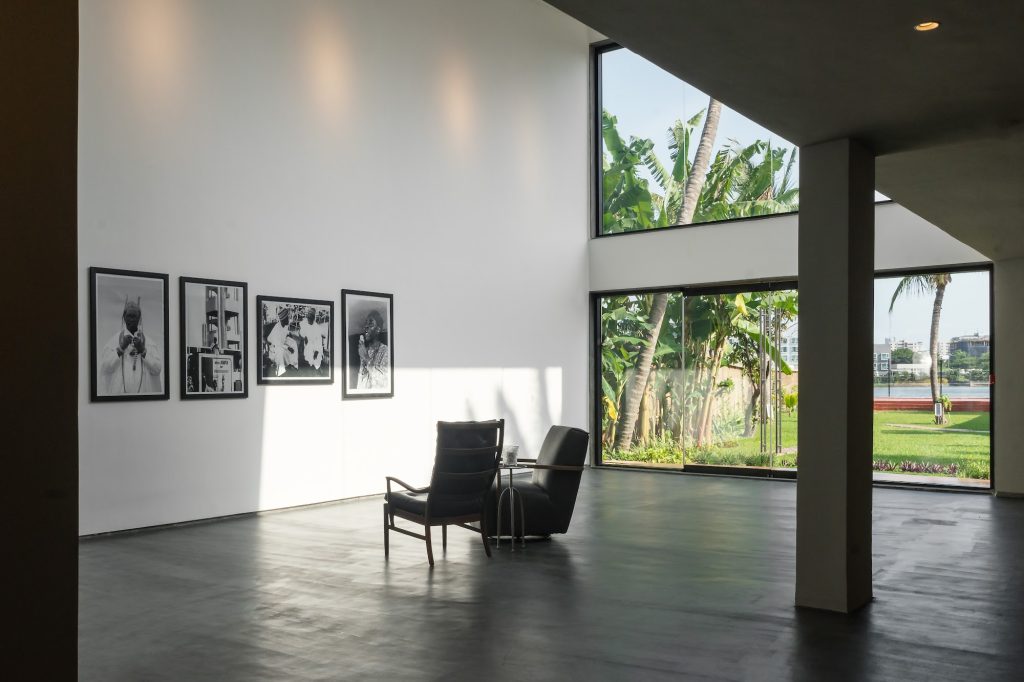
Visitors enter through The Vestibule, a transitional space intended to extract guests from the velocity of contemporary Lagos before arriving at The Sanctuary, a gallery designed to adapt to exhibitions, performances, and experimental artistic happenings. At the centre of the institution is The Commons, the social and conversational heart of the house, extending outward into The Terrace, a garden and lagoon-facing outdoor refuge immersed in nature and light. The library and reading room provide space for reflection, research, and quiet collaboration. The Magic Room hosts talks, screenings, seminars, and multidisciplinary activations. Studio Ugoma Lab, the institution’s immersive retail and object space, allows visitors to carry fragments of the Mbari Kola experience beyond the house itself.
Speaking on the design philosophy, Ugoma Ebilah said:
From the beginning, I was interested in the idea of feet forward, eyes back, the belief that cultural advancement should never come at the cost of memory. That philosophy shaped every aspect of Mbari Kola.
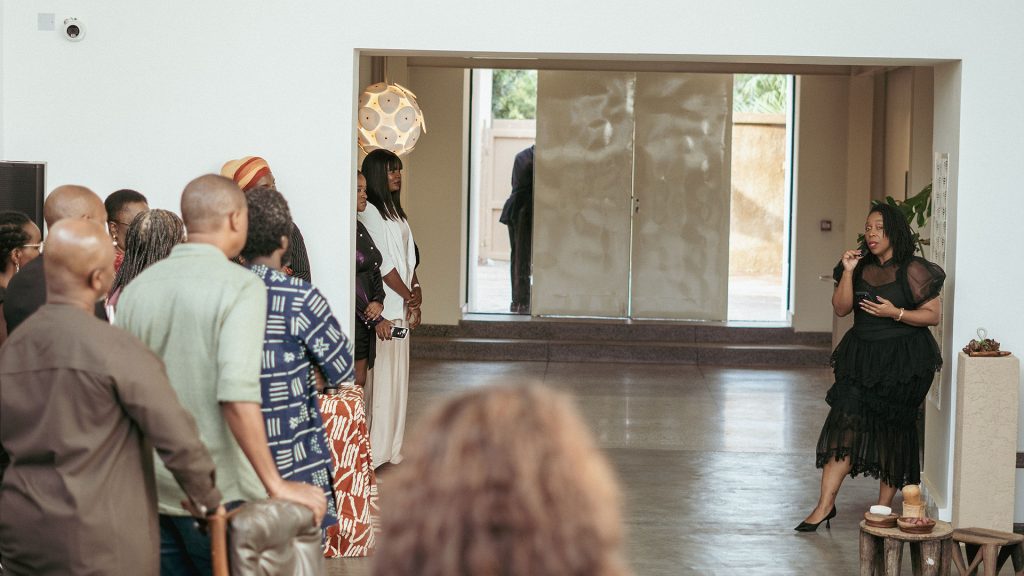
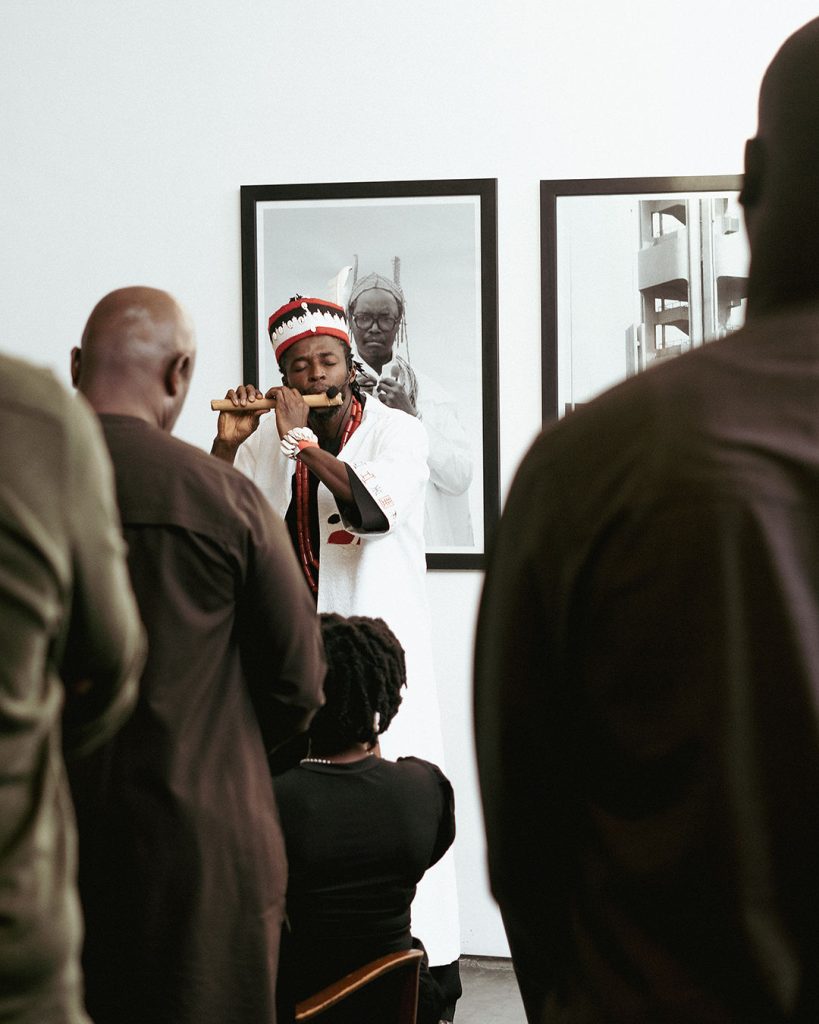
Ugoma Ebilah delivers her speech during the Mbari Kola opening | Cr.: Dowkitstrim ImageA performer playing the flute at the Mbari Kola opening | Cr.: Dowkitstrim Image
“The house draws from the spirit of the original Mbari movement and from domestic spaces that once held conversation, learning, and community at the centre of everyday life. I wanted the architecture to do more than house art; I wanted it to shape how people gather, think, and engage with culture itself.”
Mbari Kola’s programming spans art exhibitions, artist presentations, literary salons, private collection tours, film screenings, music recitals and concerts, workshops, talks and seminars, publications, curated experiences, and artist and member residencies. The institution will also function as a foundation and patronage platform supporting areas of the African arts ecosystem requiring deeper investment, visibility, and development.