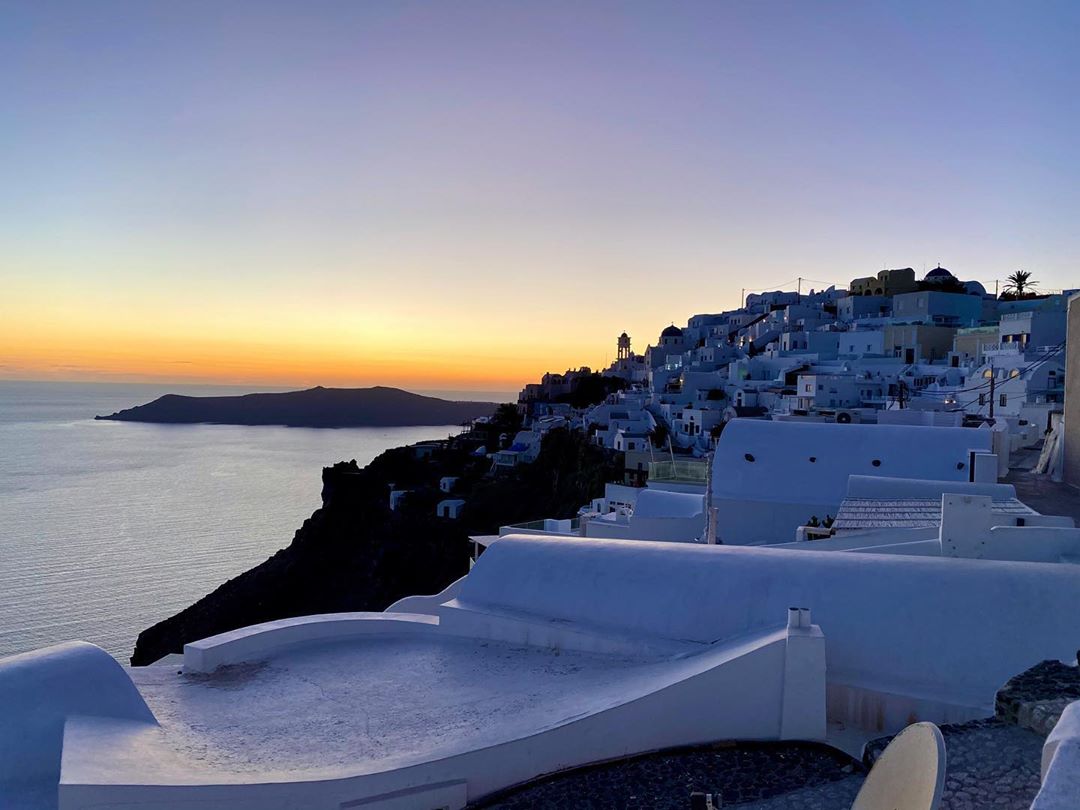
Santorini is one of the over 200 cyclade islands in Greece. It is an island in the southern Aegean Sea, about 200 km (120 mi) southeast from Greece. Its the largest island of a small, circular archipelago, which bears the same name and is the remnant of a volcanic caldera.
Getting A Visa
Getting a visa for Greece for Nigerian passport holders can be a Herculean task as Greece makes use of the Schengen visa system.
For more information about the Visa process and to apply, Click here
When to go to Santoríni
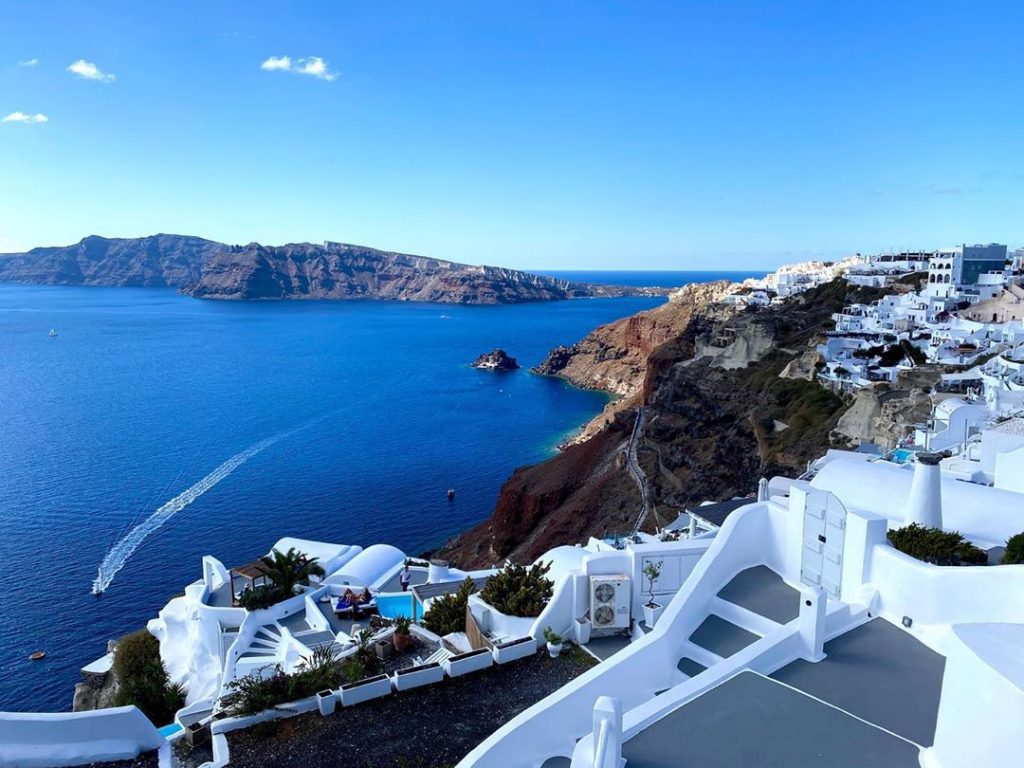
The Cyclades are most enjoyable in late spring- when the landscape is still green, the sea has warmed up to feasible swimming temperatures, but the crowds have yet to descend- and early autumn, when the summer hordes have departed and the sea is at its warmest. In both spring and autumn you can expect attractive prices for accommodation compared to summer.
But take note- not too late in autumn; after the third week in September many facilities close down, storms do hit, ferry links get sparse but paradoxically cruise ship calls at Santoríni become more frequent, with their patrons on shore leave clogging the streets of Firá and Oía towns much of the day.
There are also swarms of flies to contend with through much of September and October. Alone among the Cyclades, Santoríni- with a permanent population of about 25,000- gets significant winter tourism, especially at holiday weekends.
Where to go
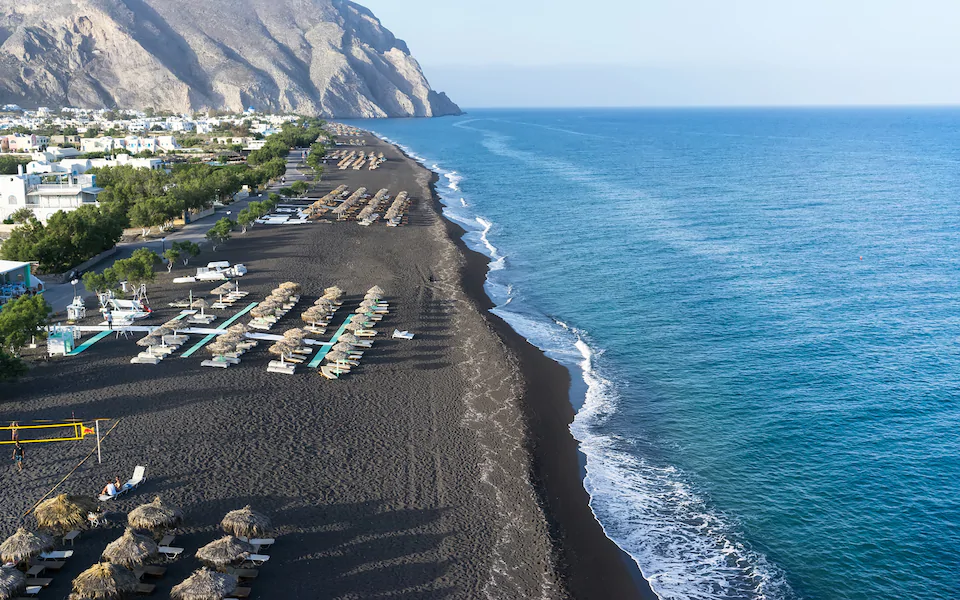
The one ‘must’ in Firá is the Museum of Prehistoric Thera, with its Minoan murals rescued from pre-cataclysm Akrotíri. Santoríni’s dark, volcanic-sand or pebble beaches are as much curiosities as bathing venues; the most practical and enjoyable are Perivólas and Vlyháda in the far south of the island. Two classic hiking routes among many go from Períssa to Kamári, past post-eruption ancient Thera, and along the caldera edge from Imerovígli to Oía. For a sense of the ancient volcano’s lingering power, take a day-trip to the caldera islets with their shoreline hot springs and clinker surfaces.
Accommodation
There are so many beautiful and comfortable hotels you can stay while in Santorini, some of the best are;
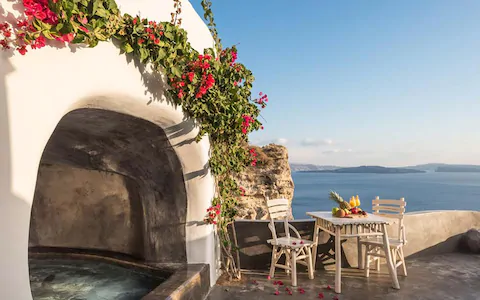
• Andronis Boutique Hotel
Ranged up the side of the famous caldera with stunning views from every suite, Andronis Boutique offers calm amid the crowds in one of the most desirable spots on the island.
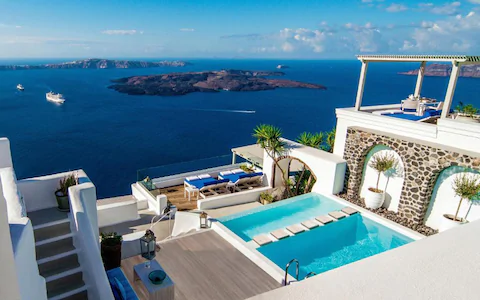
• Iconic Santorini
“Elegance is the leitmotif of this property situated in the stylish (and quiet) village of Imerovigli. Stairs coil down past the white, pale blue and ochre façade to a good-sized pool on a terrace with breathtaking views of the caldera. For a small hotel the facilities are excellent too.”
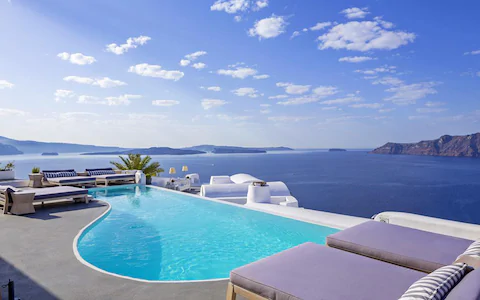
• Katikies Hotel
Katikies is one of the best places to experience the sunsets, sea views and swimming pools. The hotel is made up of dozens of whitewashed rooms tumbling down Oia’s cliffside, all with knockout views of the caldera. The three infinity pools practically melt into the horizon.
Attractions
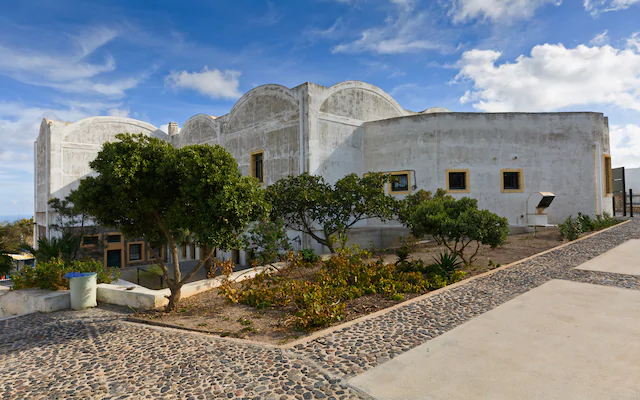
The Museum of Prehistoric Thera
They’re open daily, except Tuesdays 8am-3pm, and may open later in Summer. The star exhibits are original frescoes of cavorting blue monkeys, elegant women (one semi-nude) and Nilotic vegetation proving seafaring contacts with Egypt.
Beaches
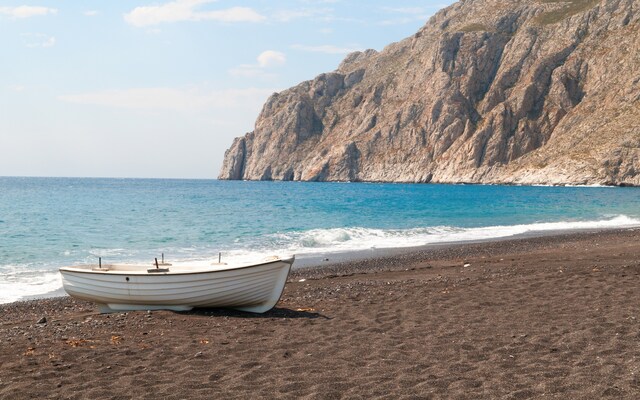
Of the island beaches, almost all featuring dark-grey volcanic sand (and in September, brilliant, fragrant white thalassókrini or sand lilies), Kamári is the most amenitied.
There are other top-drawer strands at southeast-facing Perívolos, which has beach bars pitched at a younger crowd and is found immediately south of busier and narrower Períssa, which unlike Perívolos has a slimy reef to cross getting into the sea.
Winery Tours
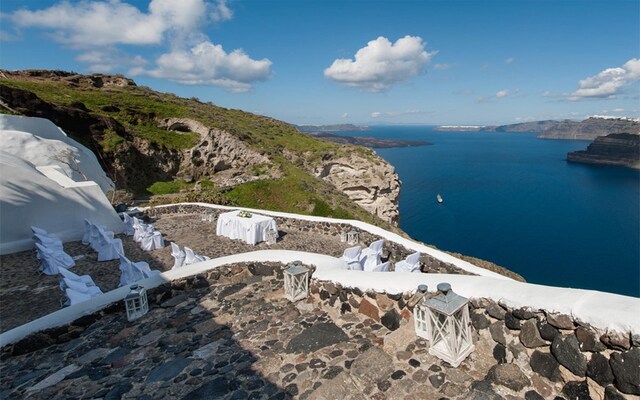
Santoríni has been designated an AOC domaine, and winemaking is the only traditional trade that’s still in rude health. Before 1917, much of the annual production was exported to Russia for ecclesiastical use.
For a few dollars (or even sometimes for free), winery tours usually allow generous sampling. Boutari, near Megalohóri (00 30 22860 81011; boutari.gr) is the biggest and most visited, with frequent tours daily, April–Oct 10am–6pm
But much the most impressive nearby outfit is Venetsanos (venetsanoswinery.com; tours May–Aug daily, 10am–10pm, Sept–Oct daily, 10am–9pm, Nov–Apr Mon–Fri 10am–3pm, may shut 21 Dec–11Jan).
This was Santoríni’s first industrial winery, built at a time (1947) when the island had no mains electricity and all procedures were gravity- or hand-assisted.
Visit The Ancient Churches
Whether we do have a belief or not, all religions and symbolics are playing a significant part in our culture and development. Some of these holy places remind people of living peacefully, inspire to do great deeds or just bring serenity to the human mind.
St. John the Baptist Cathedral
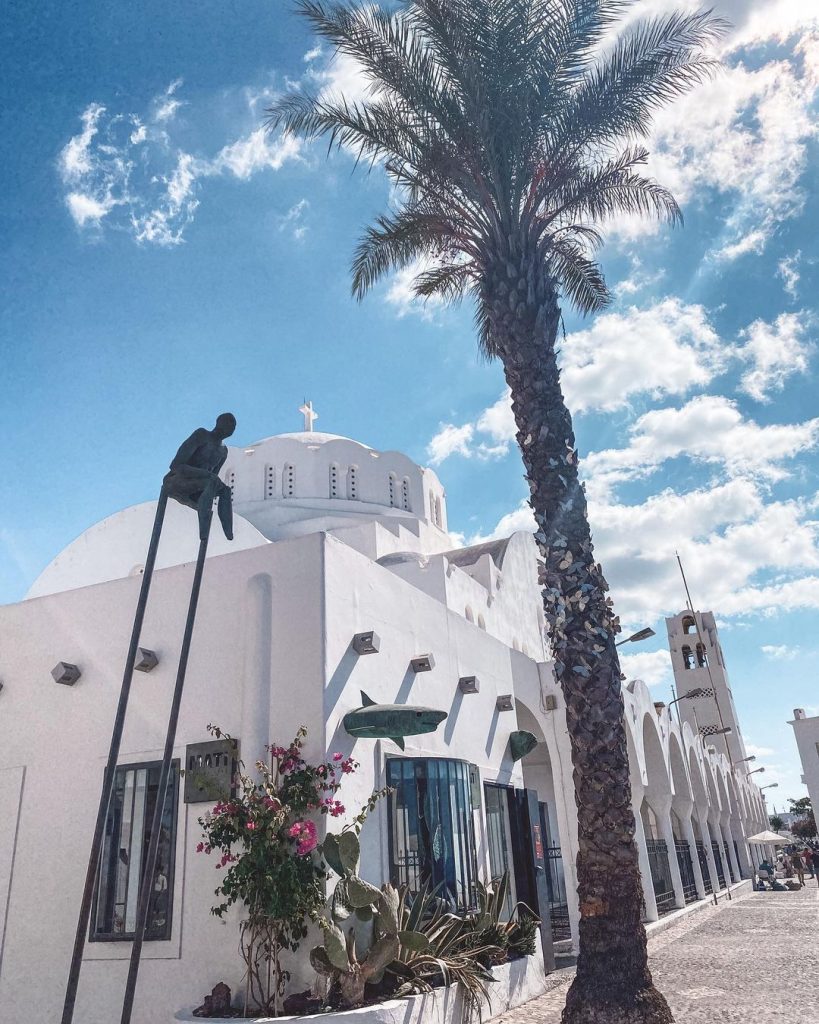
This is a roman catholic church. Surprisingly, the cathedral is a tranquil place while being located in the city centre.
Orthodox Metropolitan Cathedral
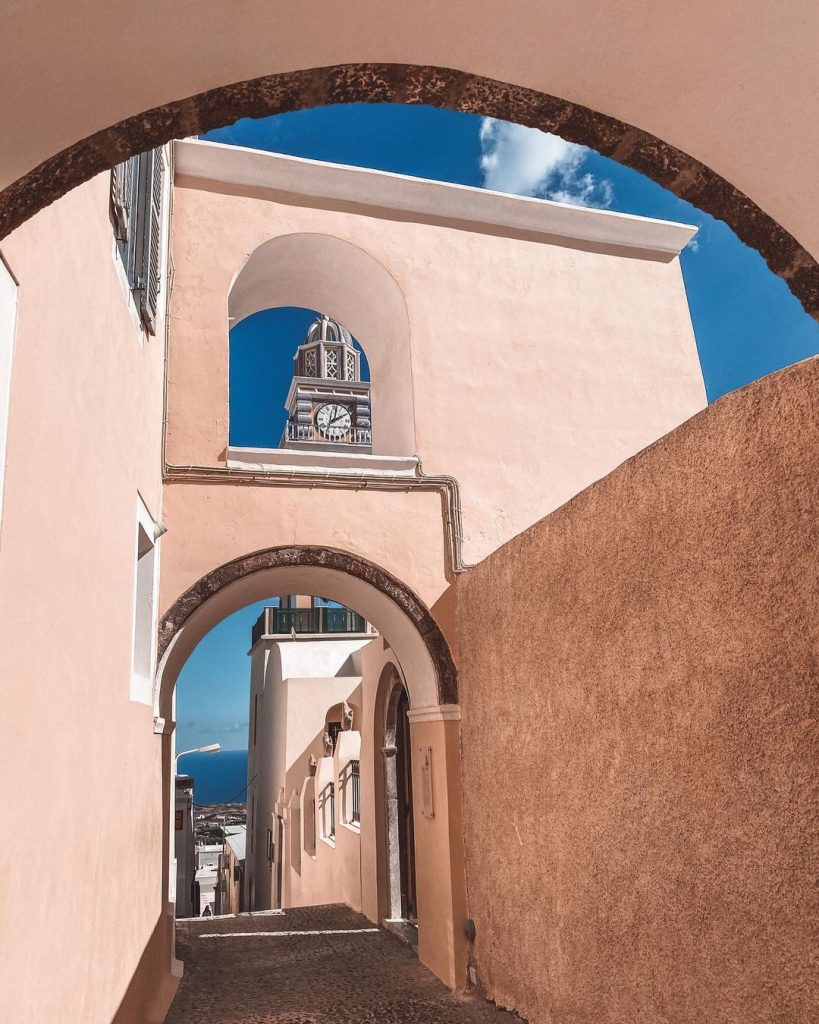
This is a beautiful location right in the centre of Fira. The cathedral has a magnificent view over Caldera.
Walking
There are more than a dozen marked walking routes on Santoríni, shown on the recommended map. On the spot, you can recognise them from sturdy wooden signposts, with red route-number metal tags.
The two most spectacular itineraries, where you’ll certainly have company, are No. 9, linking Imerovígli with Oía on an improved path skimming the caldera edge (allow 2 hrs), and No. 3 along an old cobbled, hillside trail connecting Períssa and Kamári, via the ruins of Classical-Roman Thera and the cave of Zoödóhos Pigí, containing the only potable (and very tasty – fill your bottle) spring on the island (1hr 30min). In Kamári, shuttle boats await to whisk you back to Períssa.
Scuba Diving
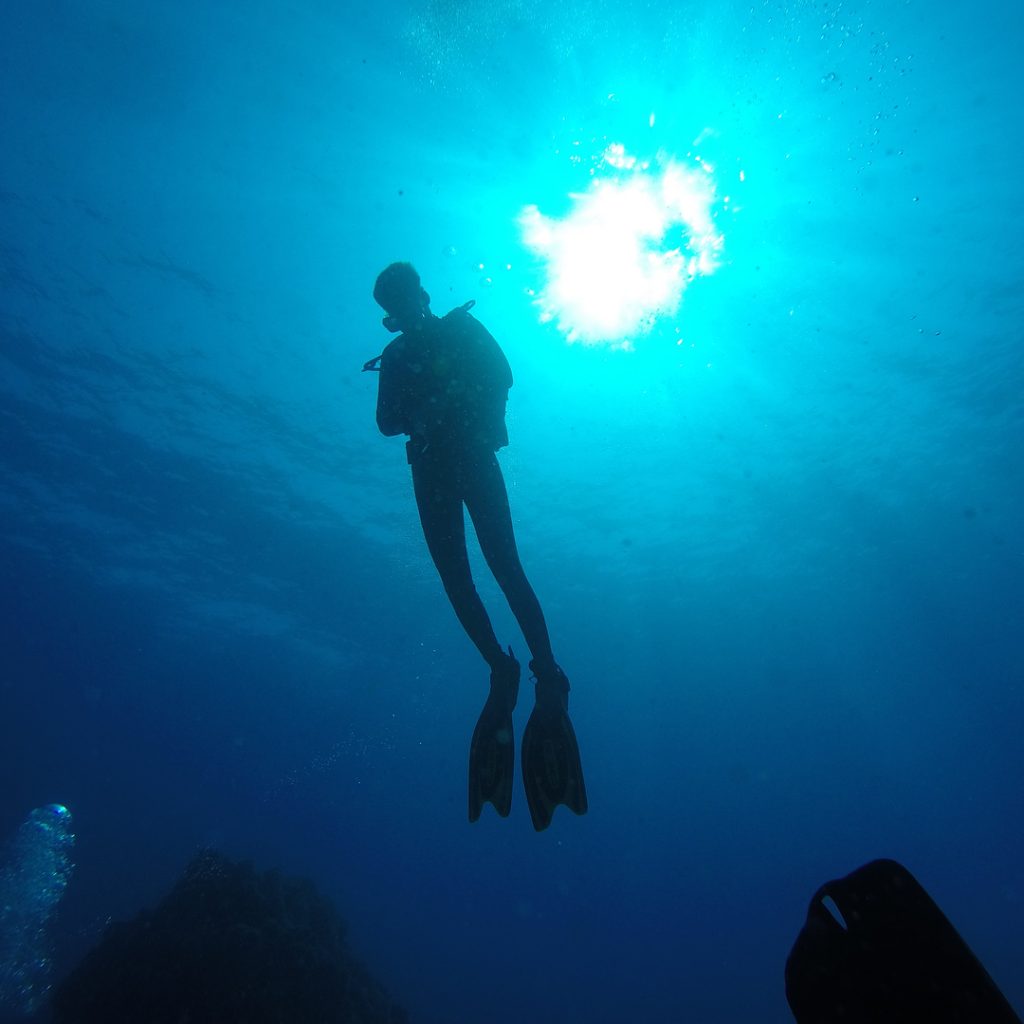
Instead of gawping at the caldera like everyone else, why not dive into it? There are nearly forty recognised scuba sites at Santoríni and Thirasiá, mostly around the caldera and its islets. Visibility (except near the mineral-rich outflow of the Kaméni hot springs) is usually good, 20m or more, but sea life is limited – this isn’t the Red Sea or the Caribbean.
The caldera offers the most exciting diving, for example at Aspronísi, where wrasse and damselfish frequent a steeply plunging wall, or around the World War II wreck between the two Kaméni islets, a freighter in good condition with hovering parrot fish and cement sacks still stowed in the bow.