The 2026 Met Gala arrived with one of its most genuinely open briefs in years. “Fashion Is Art” — two words that sound simple enough until you are standing in front of a designer trying to figure out what they actually mean on your body, on that carpet, in front of every camera in the world. Some guests interpreted it literally, while others gestured at it loosely. And a handful, including several African and diaspora talents, treated it as a proper creative challenge and rose to meet it.
Here is a look at the African names who showed up dressed with full intention.
Anok Yai — The Black Madonna
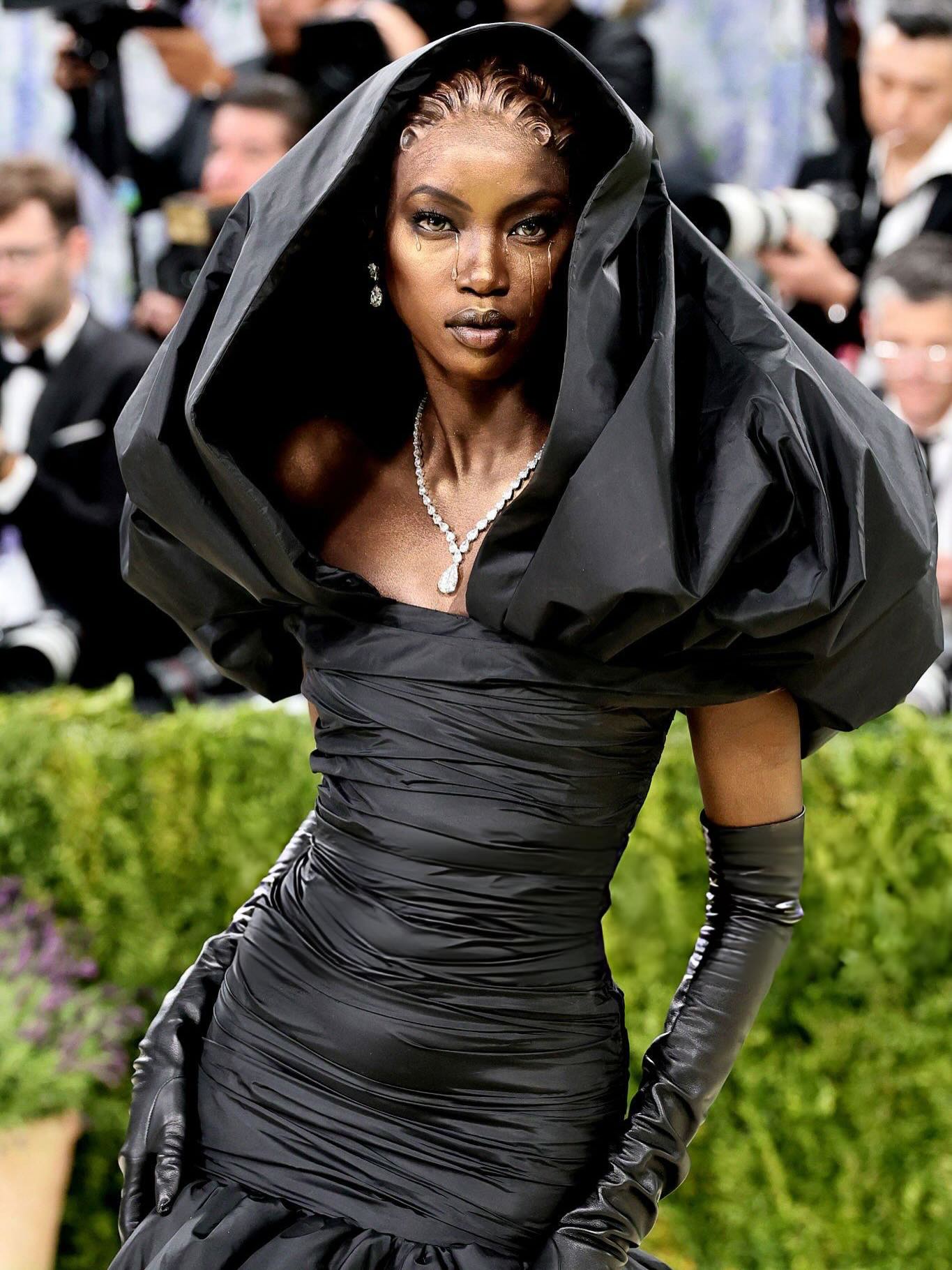
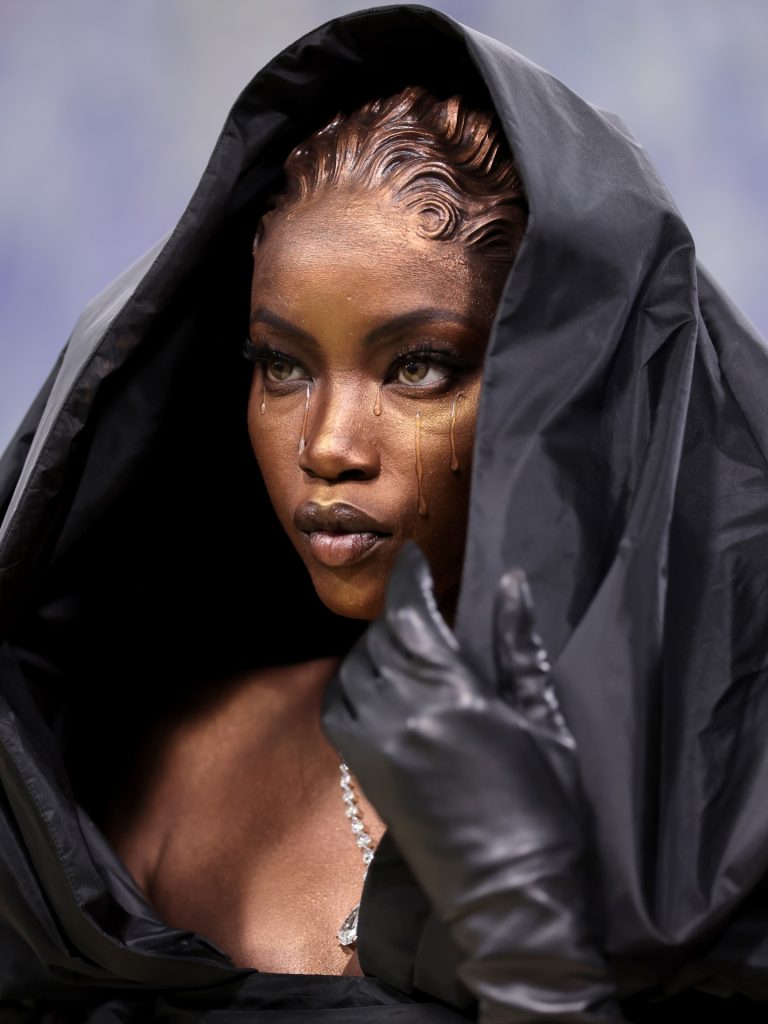
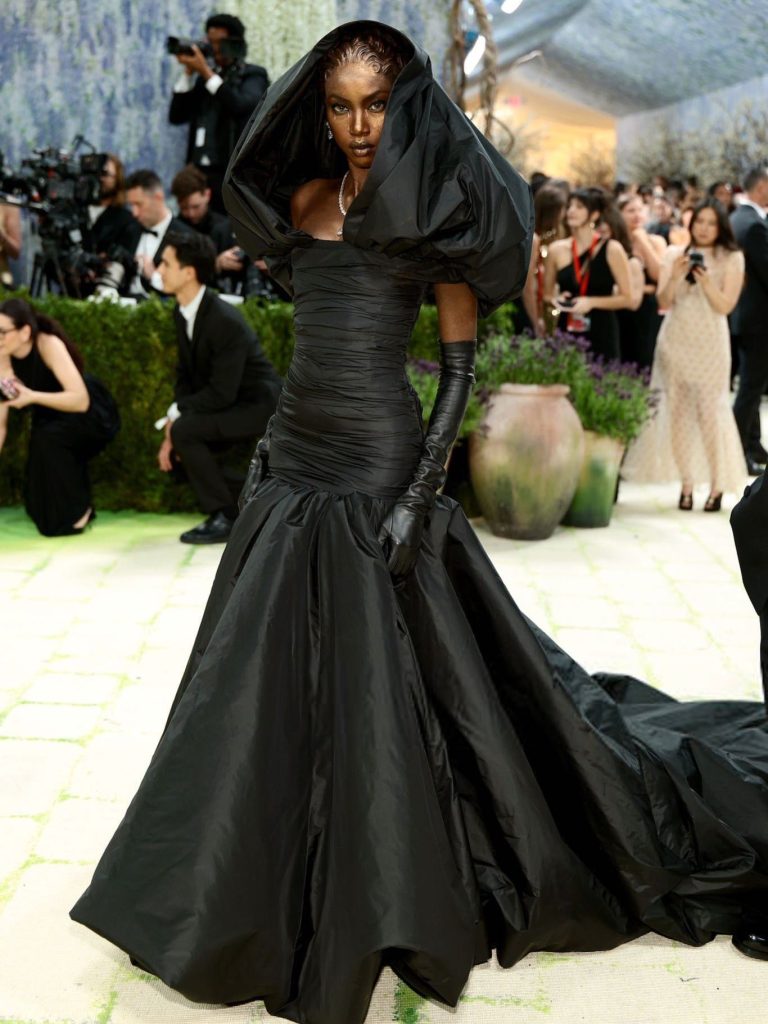
Of all the looks on the carpet that evening, Anok Yai’s was perhaps the most conceptually complete. The South Sudanese-American model worked with Balenciaga’s Pierpaolo Piccioli on a look rooted in a single, specific image: the Black Madonna. She wore a custom black silk taffeta gown with an architectural hooded collar so voluminous it created a negative visual space around her face, giving her the appearance of a freestanding sculpted bust rather than a woman in a dress. Her makeup, by Sheika Daley, applied molten gold and bronze undertones across her skin to achieve a metal finish, with wax-like tear tracks running down her face as a direct reference to the Mater Dolorosa — Our Lady of Sorrows. Her hair was a hand-sculpted prosthetic wig designed to resemble carved bronze waves, inspired by Michel Anguier’s sculpture Leda and the Swan at the Met itself.
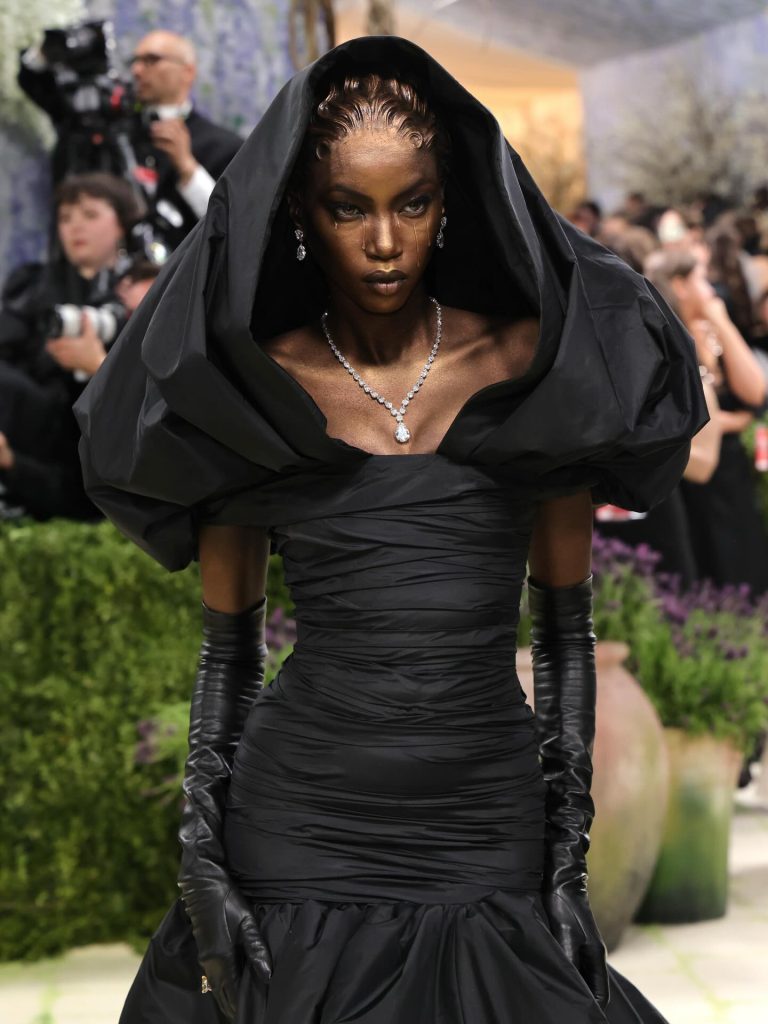
Yai had driven the concept herself, approaching Piccioli with a moodboard and a vision.
“When I first learned about the Met Gala theme this year, I knew I wanted to blur the line between being human and being art — a bronze statue caught in movement,” she said.
The result was one of the most discussed looks of the night, and rightly so. Every element; the gown, the makeup, the hair, served the same idea without a single detail out of place.
Tyla — The Peacock in Valentino
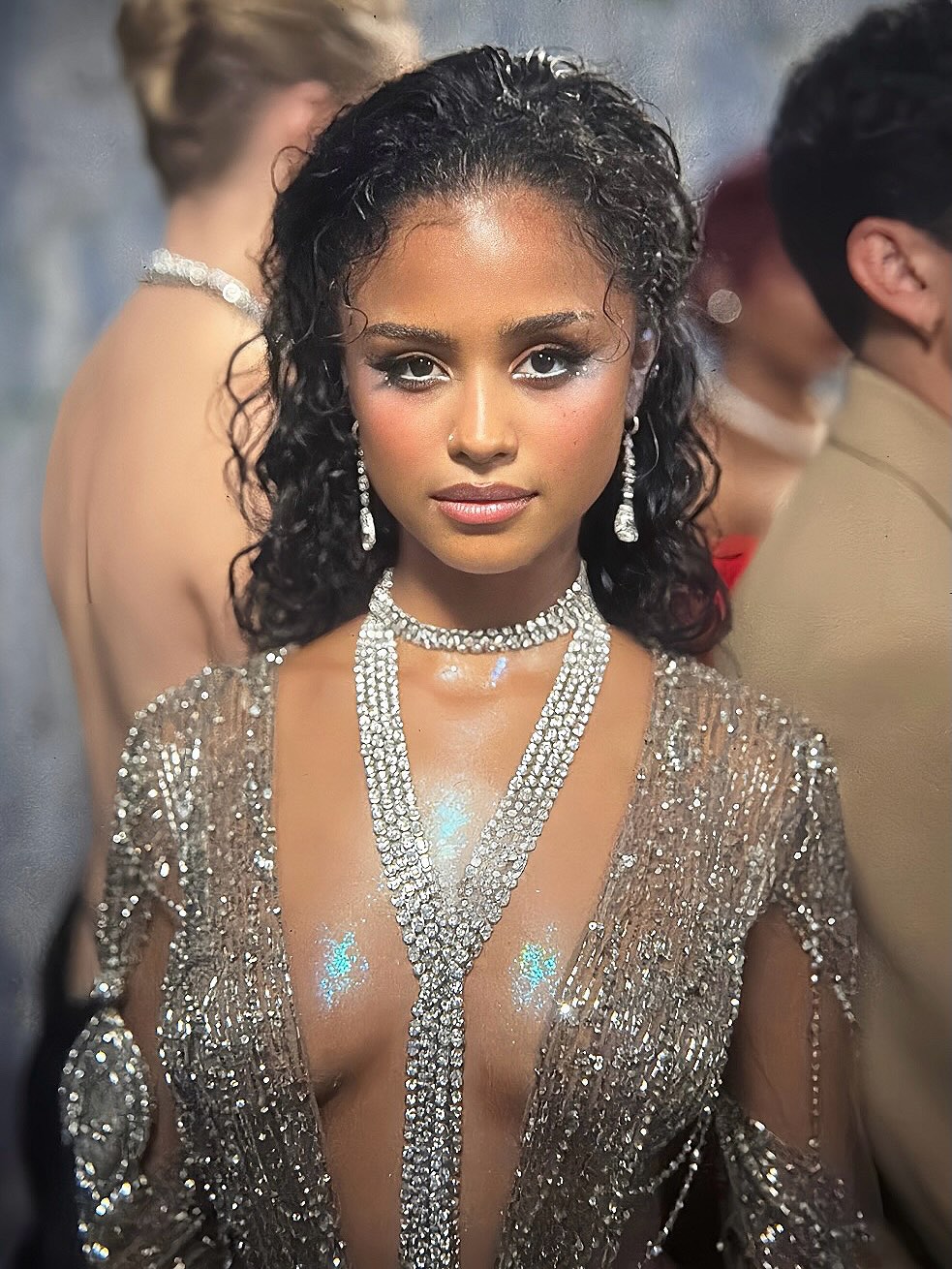
South Africa’s Grammy-winning star has now attended the Met Gala three consecutive times, and the consistency of her approach is worth noting. This year she wore a custom look by Alessandro Michele for Valentino — a satin skirt in a deep peacock blue with a dramatic slit, a silver rhinestone embroidered waistline, and a sheer tulle top with long sleeves, a deep-V neckline, and silver sequin fringes throughout. The wet-look hair, the aquamarine heels, the iridescent palette; all of it pointed back to the same source. She told the red carpet she was inspired by peacocks, and every detail confirmed it.
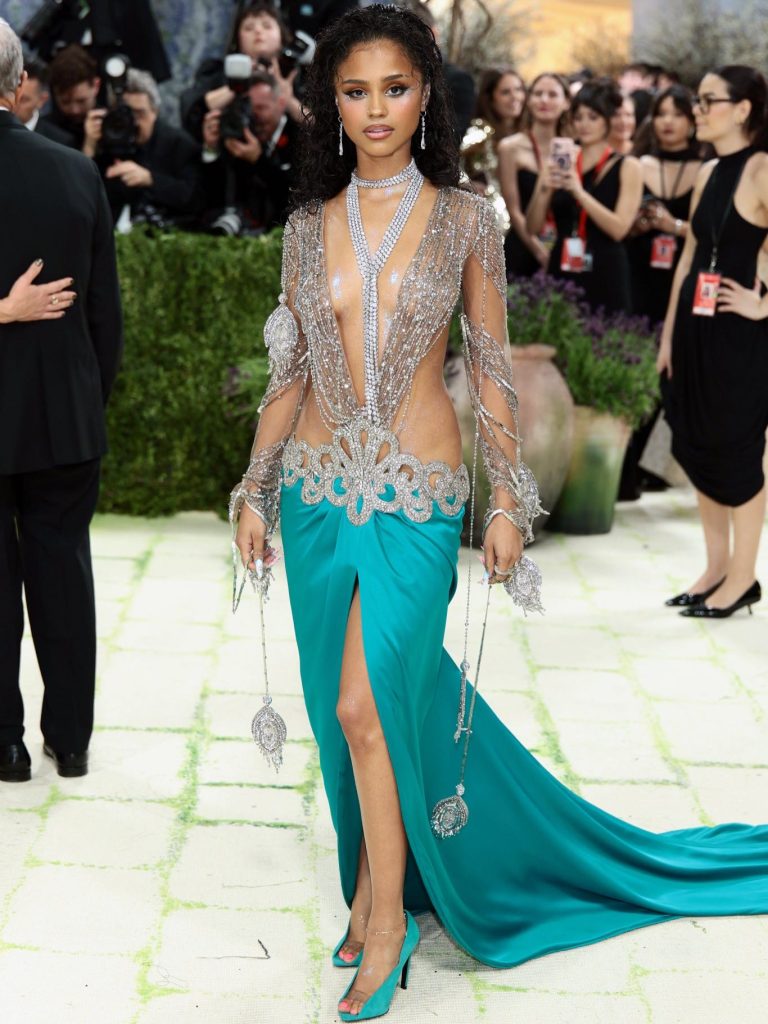
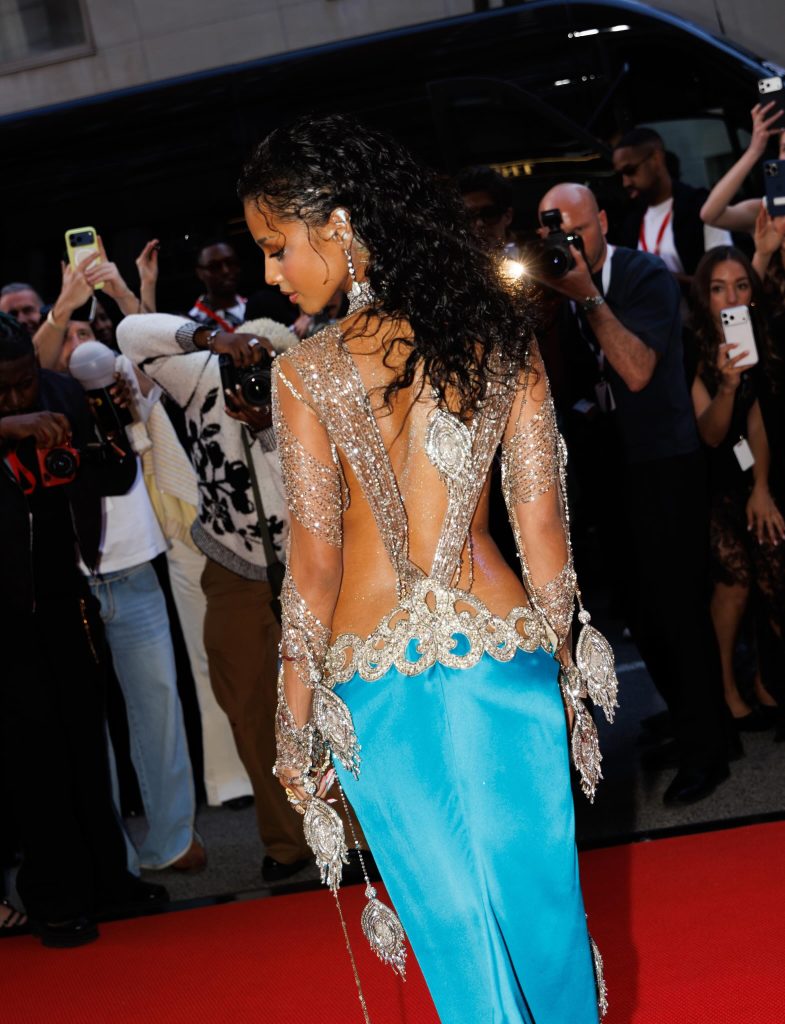
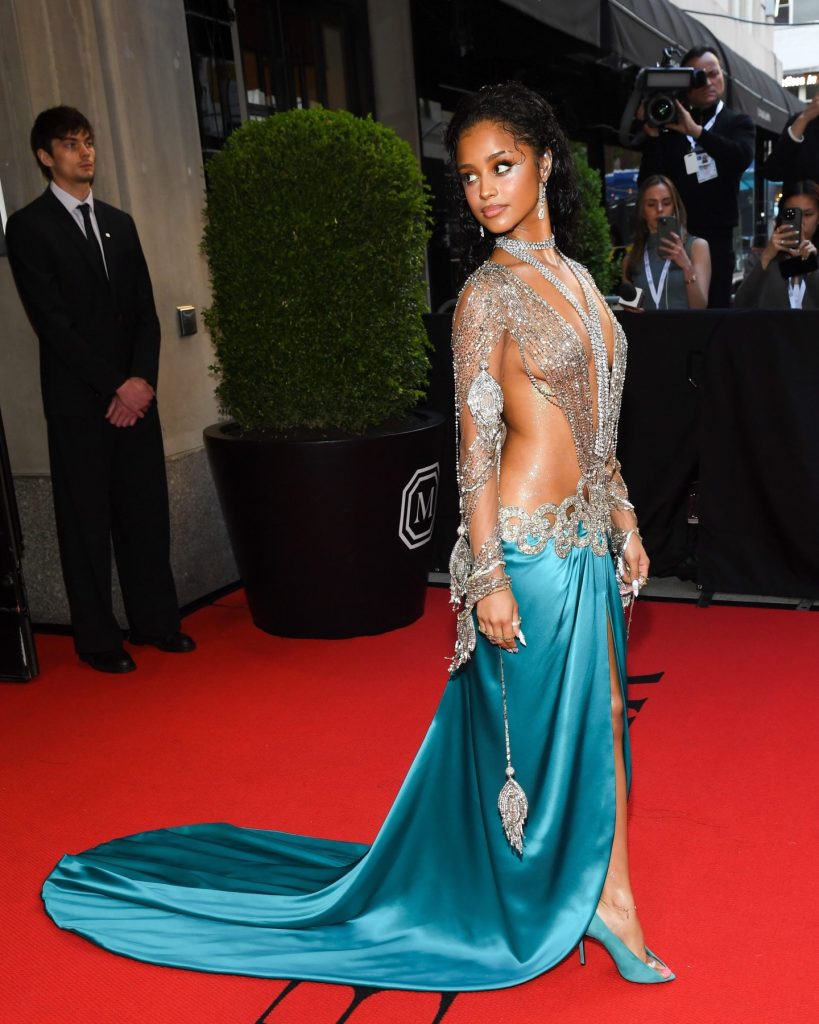
Her 2024 appearance in a sand-moulded Balmain dress that had to be cut off her body at the end of the night became an instant Met Gala classic. Her 2025 look, a custom Jacquemus pinstripe coat, was precise and quietly subversive. Now this. Three appearances, three completely distinct ideas, none of them repeating a single visual language. For an artist still in the early stages of a global career, that is a remarkably deliberate relationship with fashion as a medium.
Adut Akech — Florals for a New Beginning
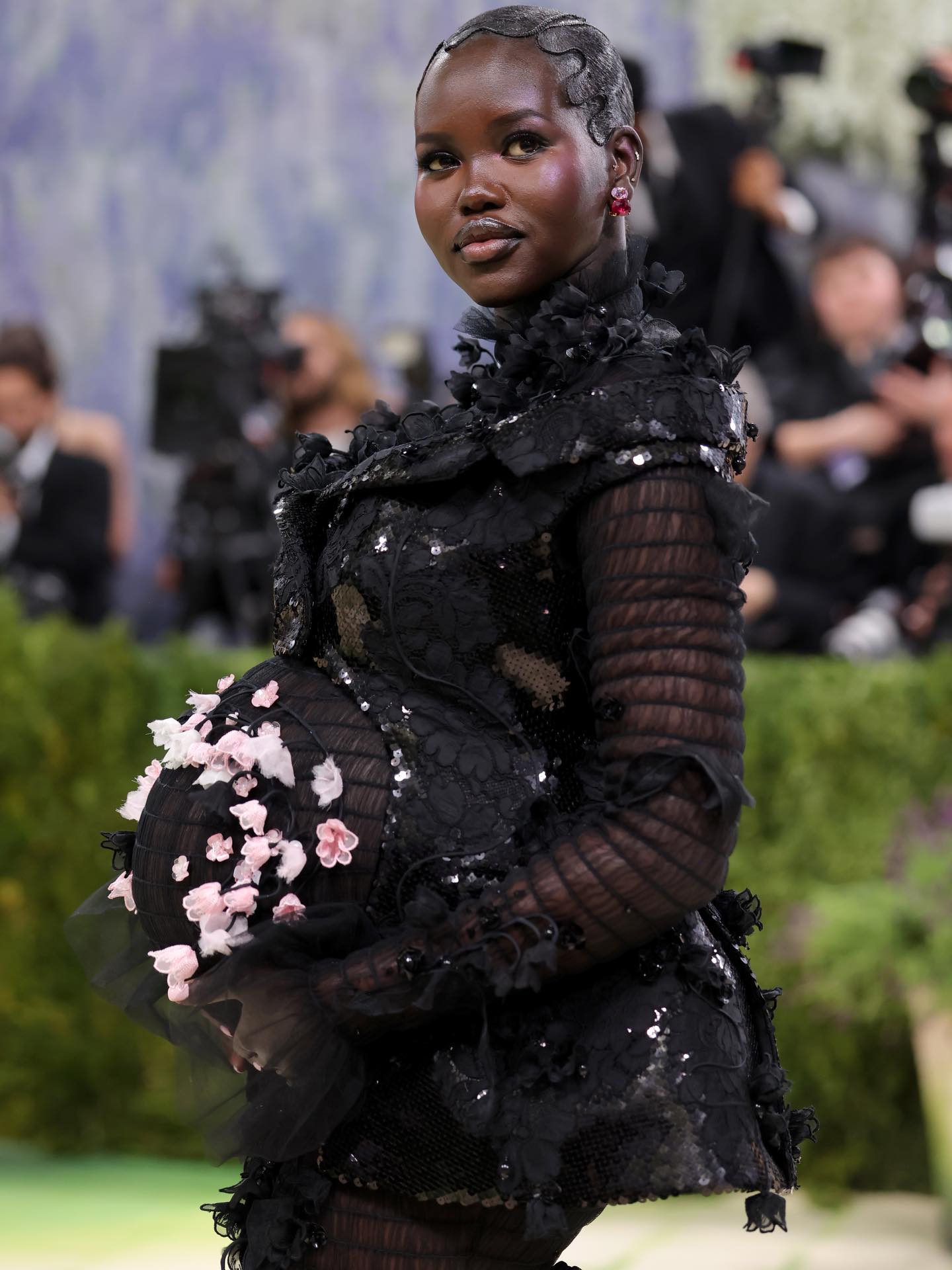
South Sudanese supermodel Adut Akech attended this year while pregnant, and Thom Browne built her look around that fact entirely. She wore a sculptural black sequin off-the-shoulder jacket over a black sheer gathered tulle dress, with over 1,100 handmade silk organza flowers incorporated throughout — lily of the valley, traditionally associated with May births, woven into the lace, silk organza, cut glass beads, and sculptured sequins.
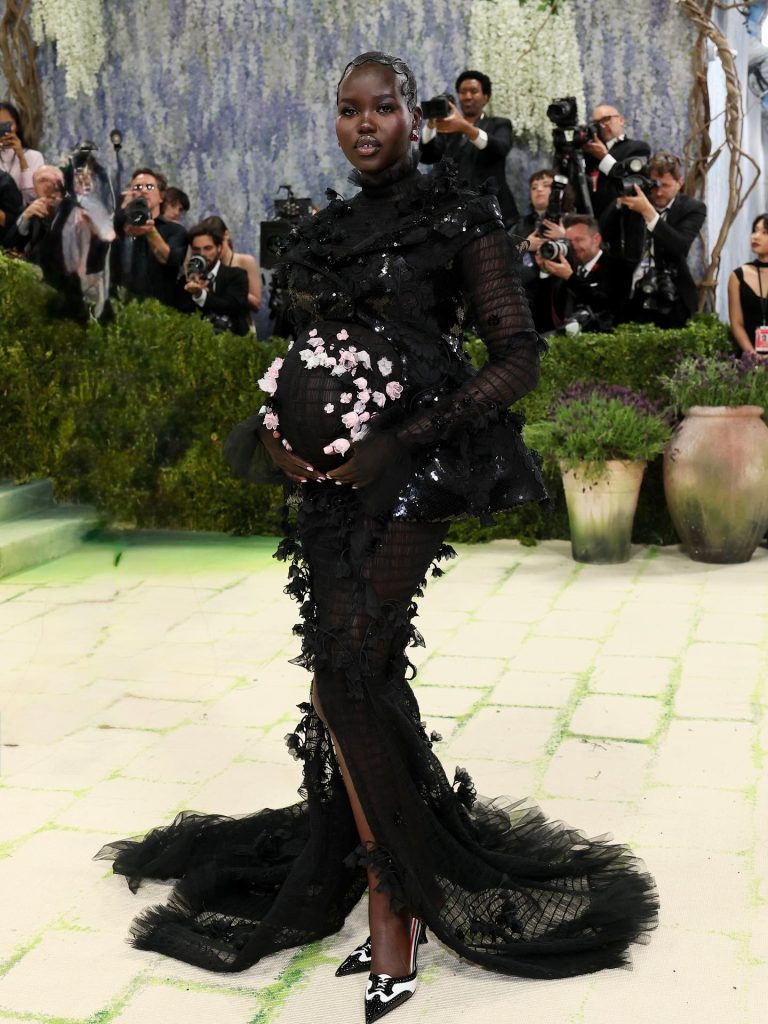
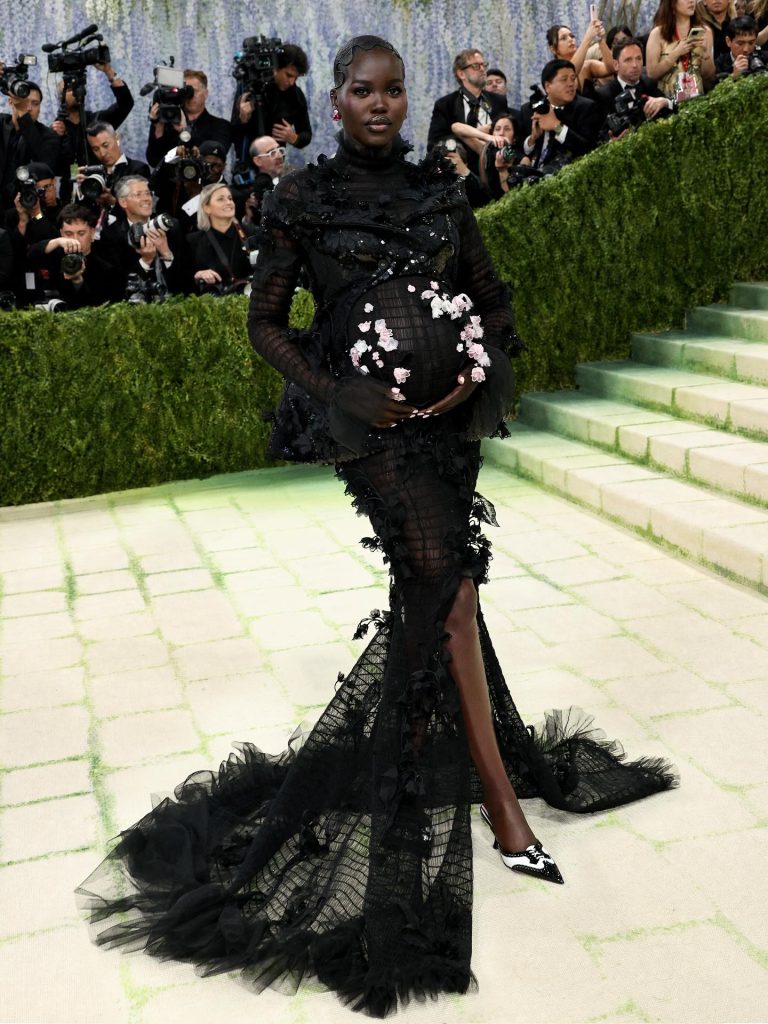
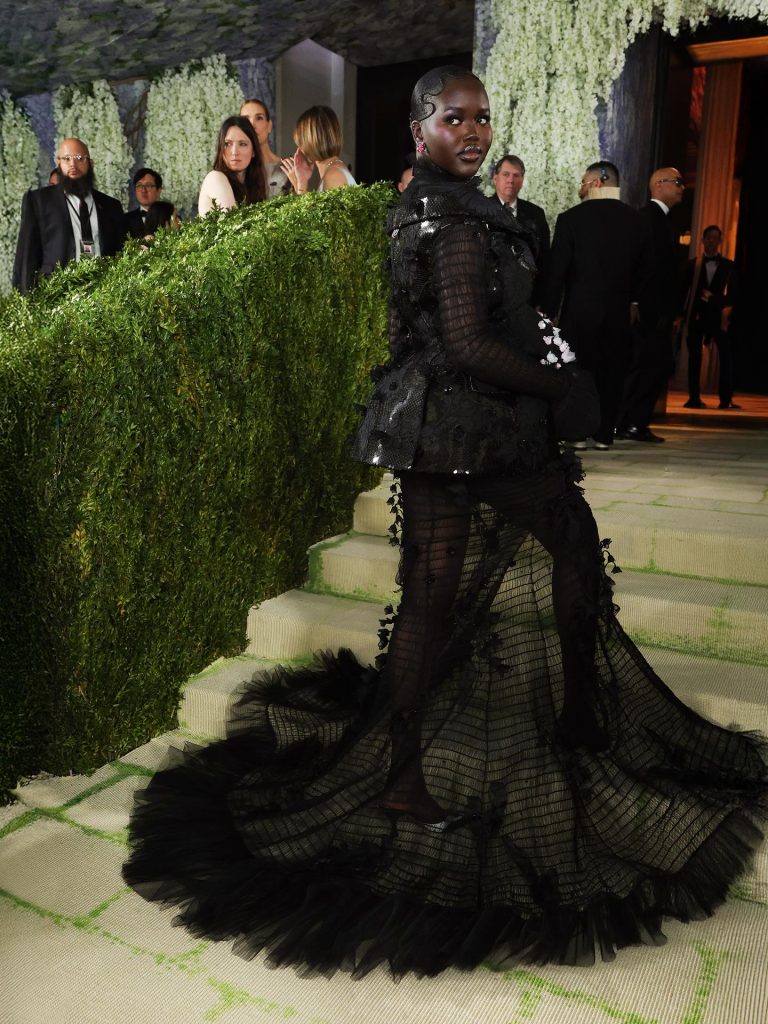
The designer framed the concept as an exploration of how a garment evolves alongside the physical changing of the body, inspired by birth and new beginnings.
It was a tender and considered look, one that took something deeply personal and made it the entire point of the design. The florals were not decoration — they were the concept, chosen for their meaning and their timing.
Skepta — The Body as Text
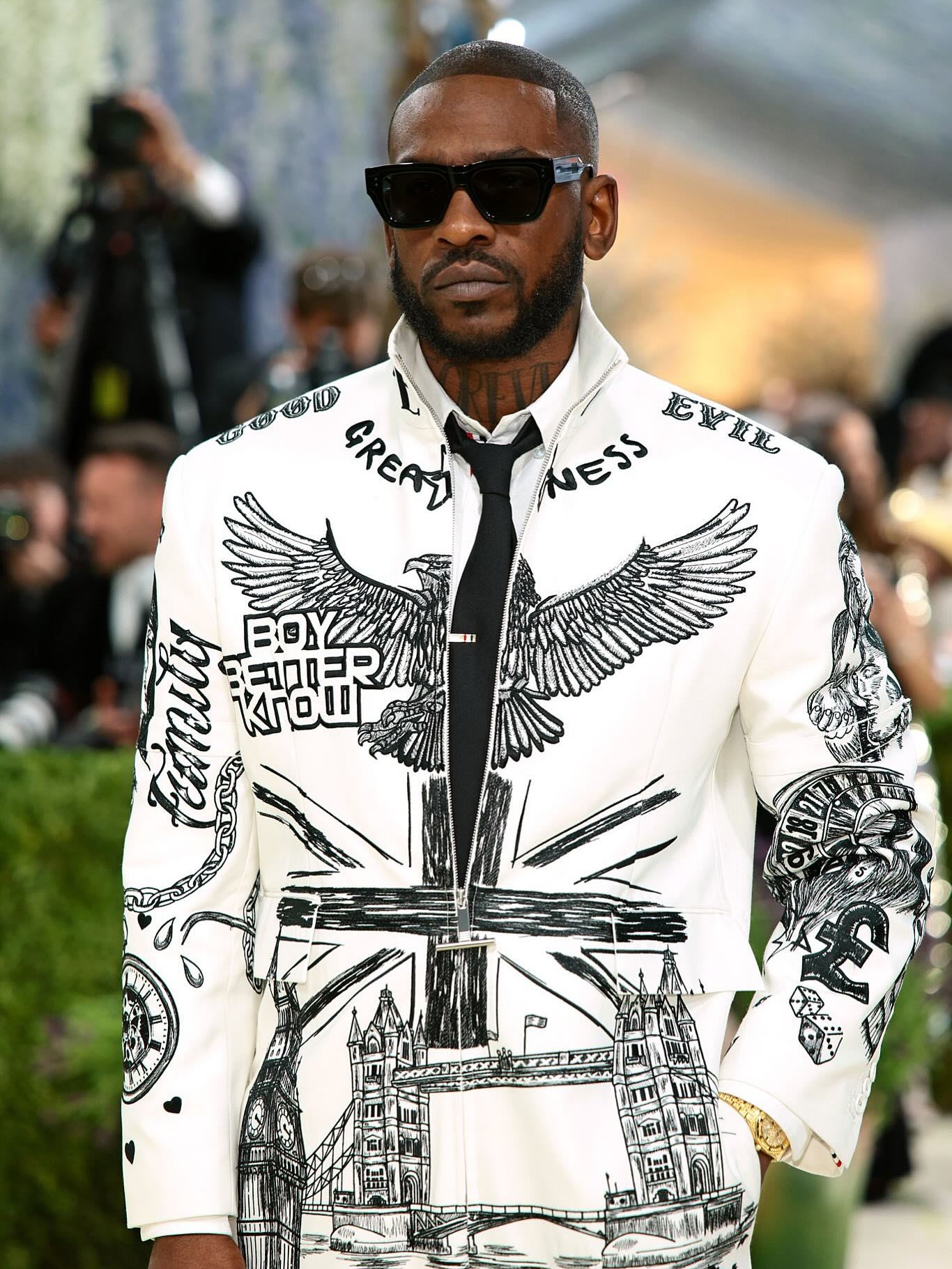
British-Nigerian rapper Skepta brought one of the most personal looks of the evening to the men’s side of the carpet. He wore a custom Thom Browne white wool tailored jumpsuit covered in black hand-drawn satin-stitch embroidery, developed to mirror his own tattoo art in exact placement and scale. The garment requiring over 4,500 metres of black thread and 500,000 stitches to complete.
The effect was striking: a man whose real skin carries a particular story, wearing a second skin that tells the same one.
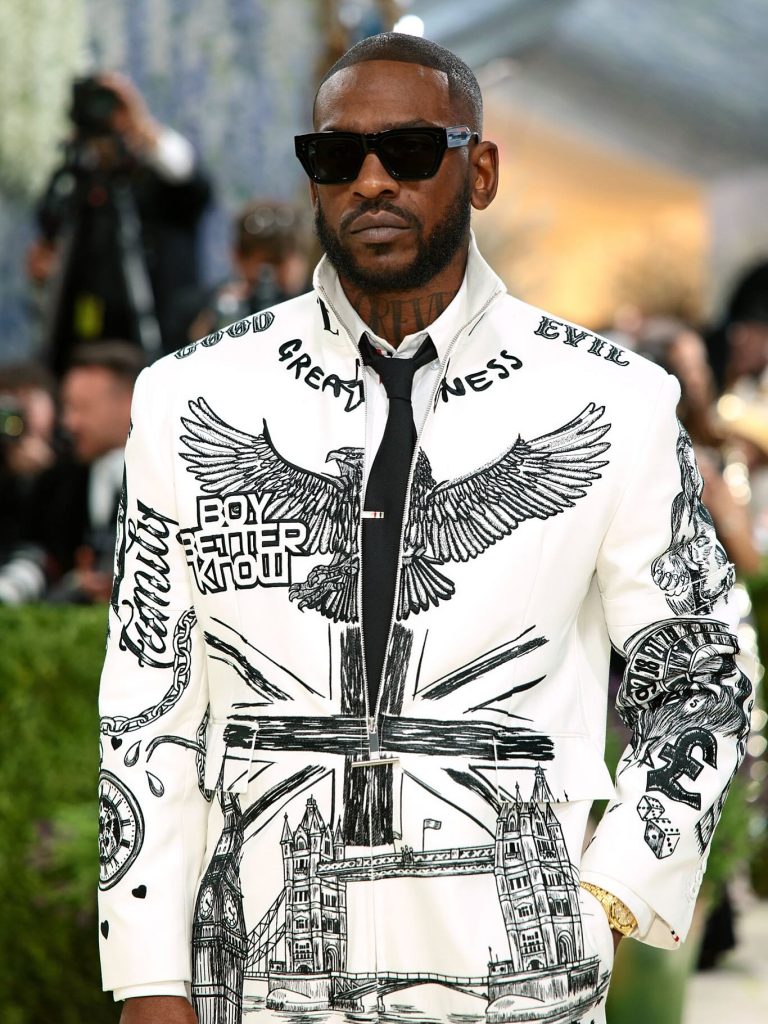
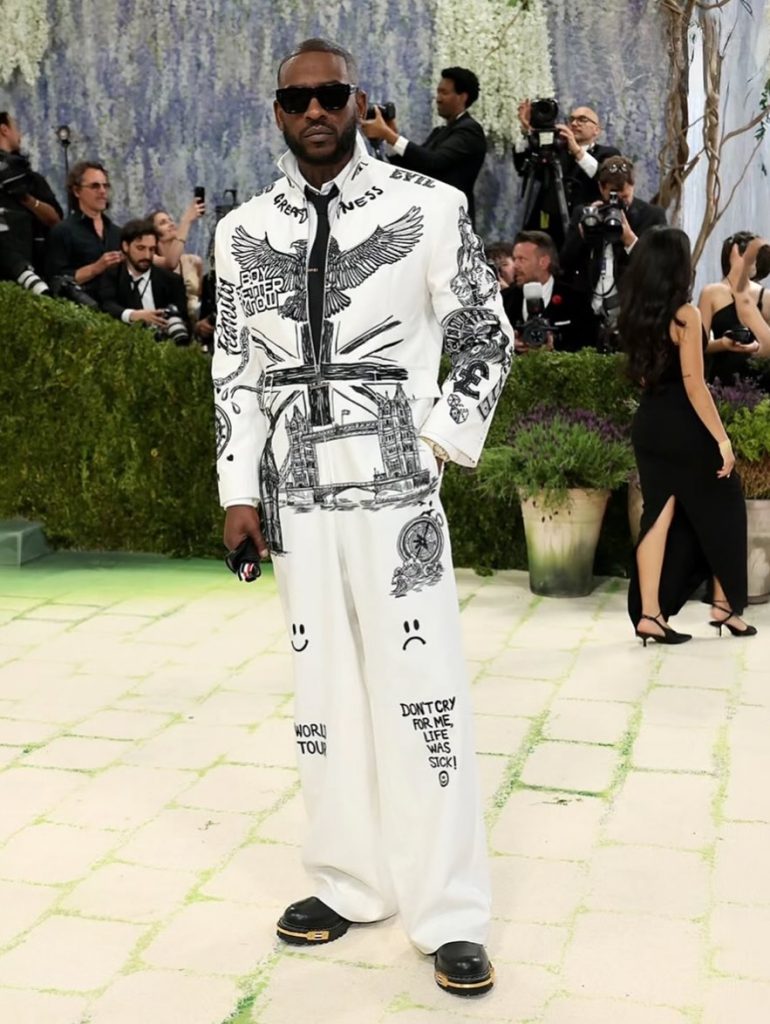
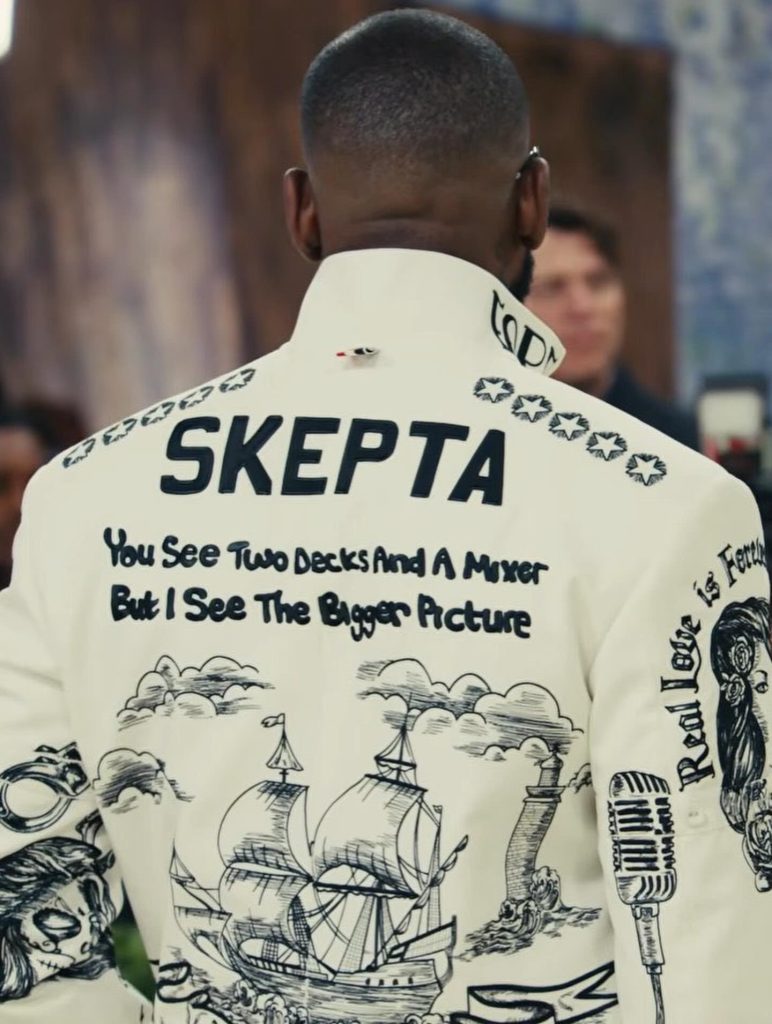
The concept used the garment to explore skin as an artistic medium, directly linking the look to the exhibition’s theme.
Skepta finished with black leather moto boots and kept accessories minimal, letting the craftsmanship carry the weight. In a room full of spectacle, that restraint was its own kind of confidence.
Ayo Edebiri — Chanel and the Classical Body
Nigerian-American actress Ayo Edebiri chose a look that drew from one of fashion’s oldest references and made it feel entirely current.
She wore a white Chanel gown by Matthieu Blazy with flowing fabric draping throughout the silhouette, framed by two feathers at the top of the bodice, evoking the draped figures of classical Greek and Roman sculpture. The long braid, the silver strappy heels, the soft volume of the chiffon, everything supported the same visual language without overcrowding it.
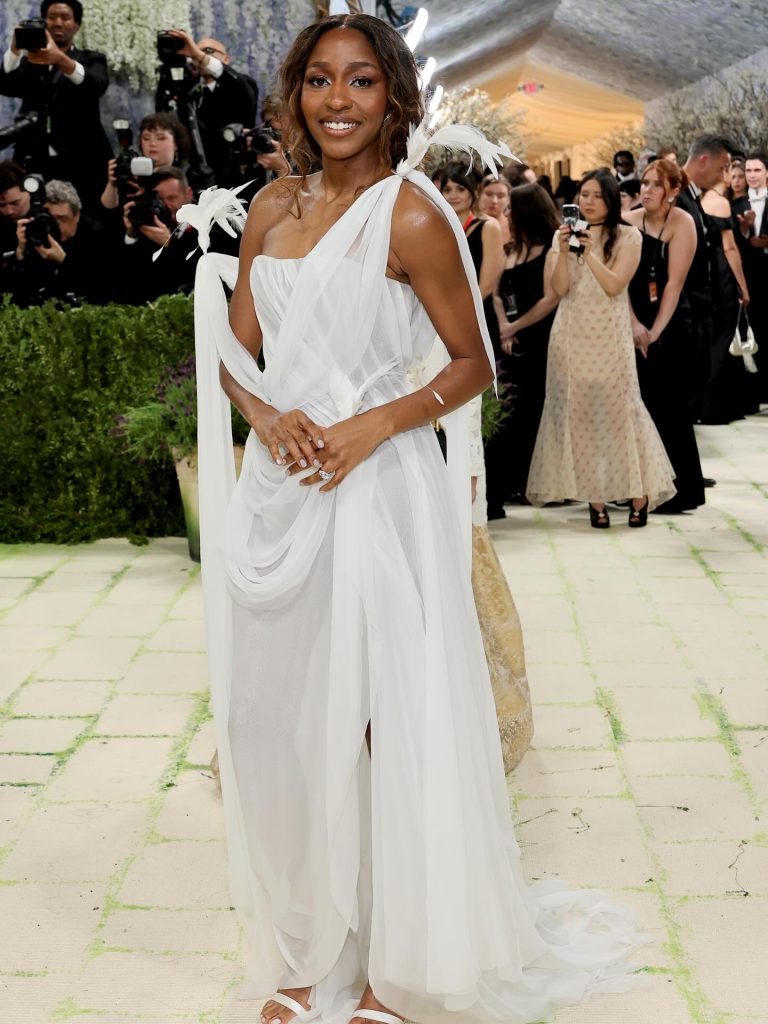
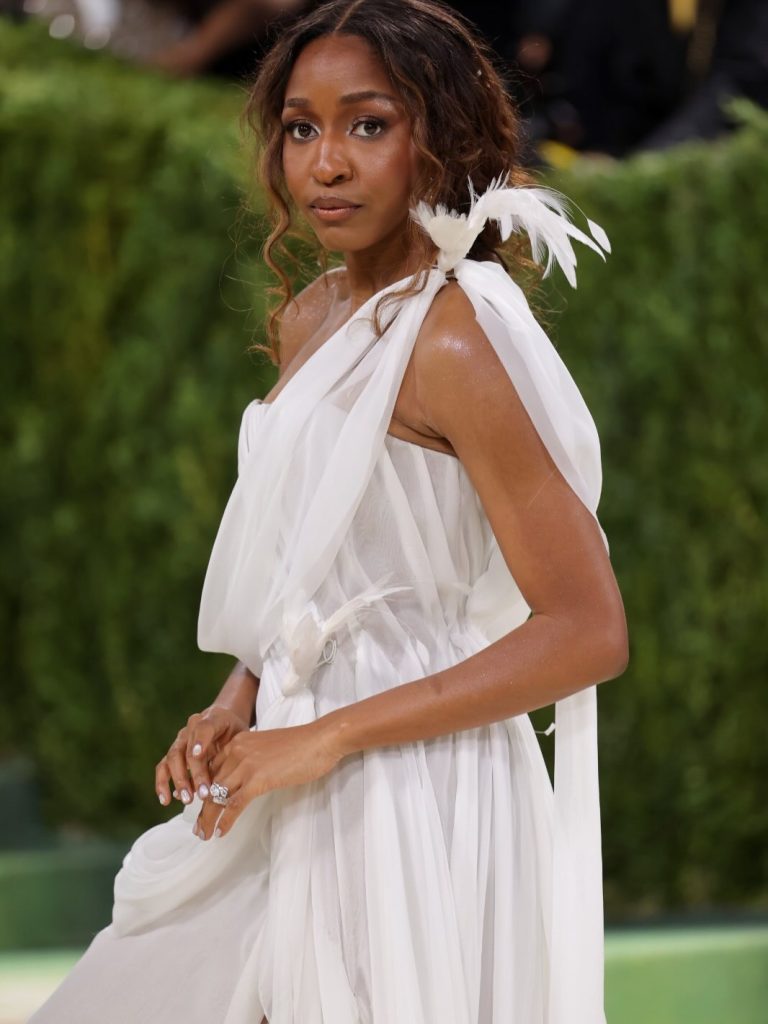
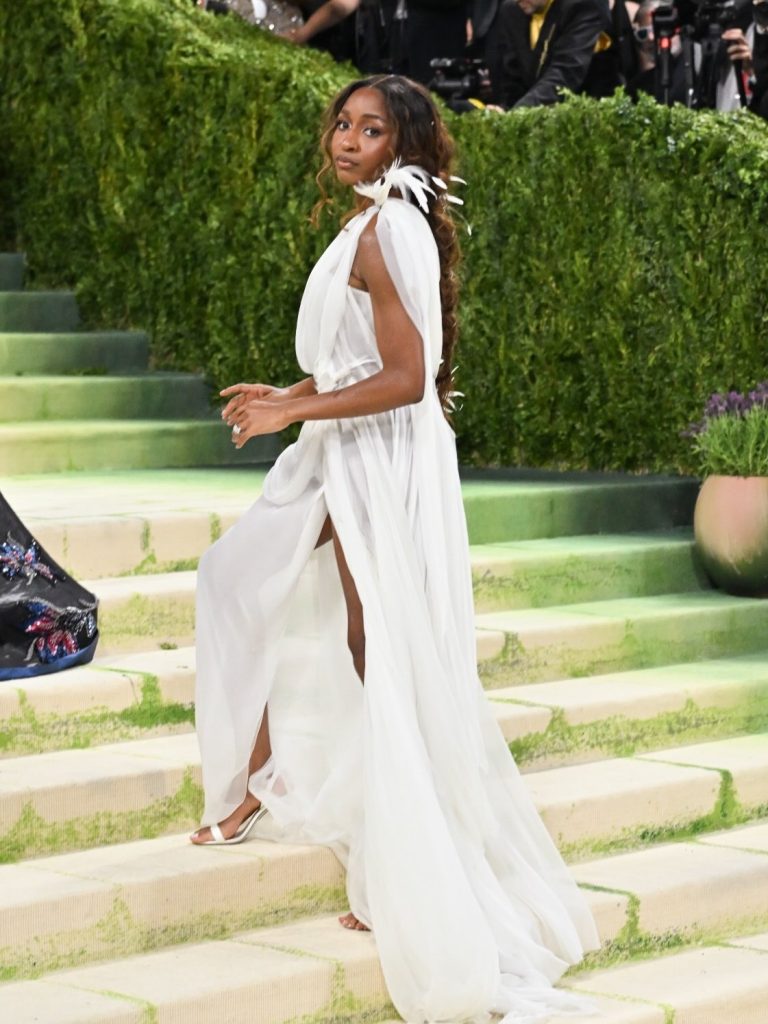
Given that the “Costume Art” exhibition itself spans thousands of years of the dressed body, Edebiri’s choice to locate herself within that longer history was quietly intelligent. It was a look that understood the theme as more than a dress code and wore that understanding with ease.
Damson Idris — Red and Restraint
British-Nigerian actor Damson Idris arrived in a custom Prada look — an oversized coat with a flash of red at the cuffs, worn over a matching red ensemble beneath. It was not the most theatrical look on the carpet, and it was not trying to be. The red was precise, the tailoring deliberate, and the overall effect confident without strain.