Dress how you want to be addressed! Modesty sets the order in the community. Obey God in all things, not just the things you see fit.
This read the caption of a TikTok video of Christian women exercising. They wore long skirts, layered yoga jackets, sweatshirts, and socks I believed were intentionally worn to cover more. The video has garnered over 390,000 views on TikTok alone and 9.9 million impressions on the app of pernicious opinion, X (as at April). And as with any viral video on Obasanjo’s internet, there were differing opinions. Many contended that the gym has never been a place to discuss modesty fashion, as our predecessors also wore “immoral” clothes to the gym; many worried about their safety given the skirts were too long and they risked falling flat on their faces whenever luck was away from them; while others bluntly said their gym outfit was ugly and a poor representation of what modesty should look like; and all I did was fall to my knees and mourn the death of GenZ liberation.
Generation Z, colloquially known as the “woke” generation, is slowly slipping into conservative values, and the renaissance of modesty fashion, even at the gym, is the only evidence we need in this court.
And if you need more, I can point at the rise of hyper-femininity coaches, their consistent YouTube videos, and their blabbering $30 courses about securing a high-value man. I can point at Pretty Little Thing, a fast fashion sensation, rebranding its entire website to fit the “clean girl” aesthetics. I can point at the sudden feminine urge from women to turn their brains off for a male partner to make all the decisions for them. And, a bit of a stretch, Trump winning the US election with maximum worldwide support. Many believe this is a result of the global conservative shift, and others think Gen Zers are just getting old. While I do not disagree, this essay doesn’t seek to predict the “why” but to say, “Please, stop this madness”.
As an Igbo woman, I have learned that the concept of modesty in fashion is deeply rooted in colonialism and neocolonialism—decomposed remains of their doing and undoing. Many Conservative Africans look back at the 1900s and call it the zeitgeist of African culture, but a better look into history divulges women who do not believe that unclad breasts were immoral. Women wore wrappers across the chest, beads around their waist and called it a day—sartorial pieces perfectly logical for people who lived in a hotter climate than the colonisers. However, it never stopped the European and Arab settlers from pronouncing African fashion as uncivilised and imposing their Victorian and Arab conservative dressing on the entire continent.
And yes, I know that culture is dynamic, and Africa has “rebranded,” and after all the “transformation,” we must have adopted a new way to define clothing modesty, but this stated fact alone stains the concept of modesty fashion and exposes it as a matter of subjectivity and not objectivity. Who then has the power to define what is modest and what is not?
On a hot Tuesday afternoon, my size 6 self wore a floral noodle strap jumpsuit, prepared to serve bare shoulders. I boarded a bus heading to a friend’s house. On the way, I saw a group of men harassing a young lady. They had all attempted to touch her as she passed the junction, singing to her bottom in rascality and pleading she picked one of them. I was seated in the back seat with a woman who was quick to reprimand the men, and this escalated a conversation regarding the lady’s dress with the driver. The driver did not side with the assaulters, but he strongly believed that the girl’s clothing was immoral, and as a result, she must bear contributory blame for what had happened to her at the junction. I was beyond livid at how this man considered her dressing immoral. A tank top and a pair of jeans? I interrupted the conversation and asked him to put my dress and hers on a morality scale, and to my surprise, he deemed me the virtuous woman. That was when it dawned on me that the moral compass for modesty fashion was very unfair to larger-sized women. Africa, well known for its abundance of women with larger body mass, places these same women under a Western modesty microscope and deems almost every clothing they wear immoral.
The ethics of modesty fashion pushes the idea of objectification of women and not in the old-fashioned way that poses a victim’s first question— “What was she wearing?”— but in a manner that encourages women to wear their values on their body, and this ultimately decides who she attracts and how she must expect to be treated. It relies on defining women by their body parts, assigning which bits are or aren’t appropriate to show in public. It seeks to fit women in two opaque boxes bestowing them either as saintly madonnas or whores.
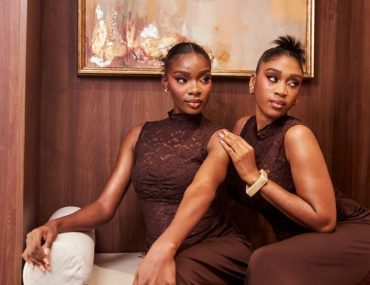
Dressing is the most essential part of being human. It portrays self-expression, a route to storytelling, and most importantly, the functionality of protecting oneself with clothing. It is preposterous that a necessity that validates our humanity is used to posture. The hyper-femininity coaches now align with modesty fashion if they desire a “good” man. They say “your BBL clothes will not give you a high-value man”, so once again, it is repackaged as a competition and a way to keep men at the center of a woman’s life. The dresses not only position these women for bourgeoisie men but also delude them into believing they now belong to the upper echelon of society. With Gen Zers, Modesty fashion is planting seeds of classism in the heads of its participants. The modesty preachers don’t just wear their long skirts in peace. They assert that their mode of dressing is the “right” way and the only path to discovering “true” beauty, and any person who dresses otherwise must lack both class and “true” beauty.
The aim of this harangue is not to reprimand people who desire to wear more clothes. I completely understand that a woman can feel content in her skin and still desire less revealing clothing; can decide to dress “modestly” because they desire comfort. My problem with modest fashion is not the dress itself but the label. I urge consumers to stray away from constricting clothes to morality. Rather, embrace grouping fashion with functionality. Imagine if an event office described the attendance dress code as “modest” and “immodest,” would they have fully conveyed the idea of how they want attendees to come? It’s better to say a corporate dress, gym wear, beach wear, or a casual fit than a modest dress.
Morality has no say in fashion.