The Adaptation That Could Change Everything: What ‘Baba Segi’s Wives’ Really Means for Nollywood
On January 15, 2026, Mo Abudu’s EbonyLife Films announced that The Secret Lives of Baba Segi’s Wives would hit cinemas this December. The headlines celebrated the star-studded cast and the long-awaited adaptation of Lola Shoneyin’s beloved novel. Beneath the celebration lies a question that could define Nollywood’s next chapter: Can the industry successfully adapt its most celebrated literature?
The answer matters far more than one film’s box office performance.
The Netflix Pivot Nobody’s Talking About
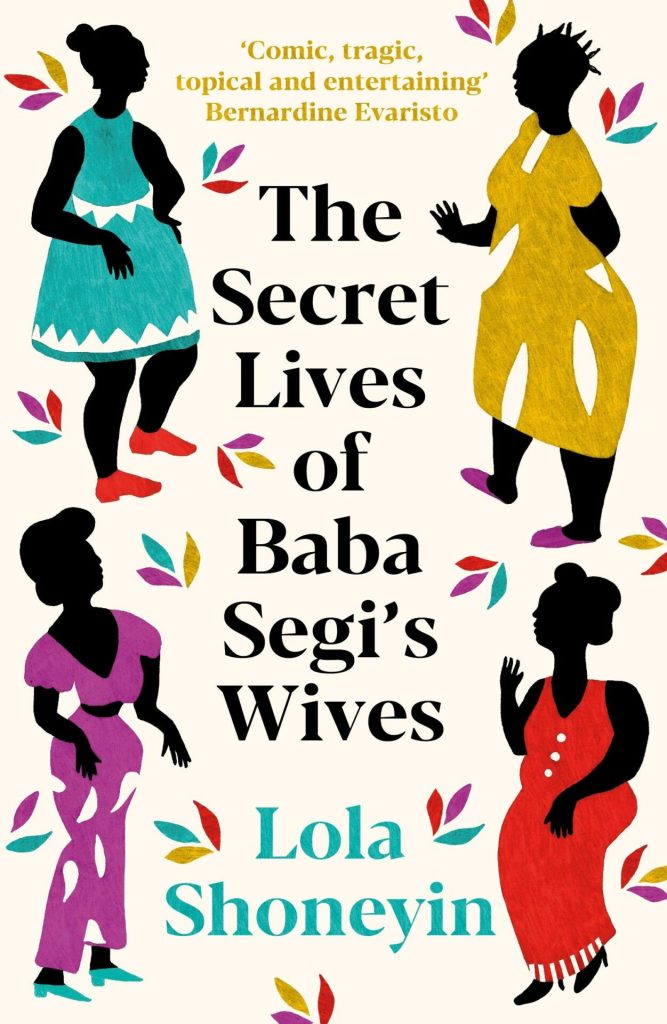
Here is what most coverage missed: this theatrical release represents a dramatic shift in strategy. In June 2020, Netflix announced plans for a series adaptation of Baba Segi’s Wives. Six years later, that series has transformed into a theatrical feature backed by four Nigerian entertainment powerhouses—EbonyLife, Genesis Group, Nile Media Entertainment, and Silverbird Group.
The pivot from streaming to cinema is telling. It suggests the producers believe this story deserves “a worldwide cinema audience,” as Nile Group CEO Moses Babatope put it. However, it also reveals something deeper. After Nollywood’s historic 2025, when local films captured 53% of Nigerian cinema ticket sales, compared with Hollywood’s 47%, there’s renewed confidence that Nigerian stories can dominate theatrically.
That confidence will be tested in December.
Baba Segi’s Wives: What Success Actually Looks Like
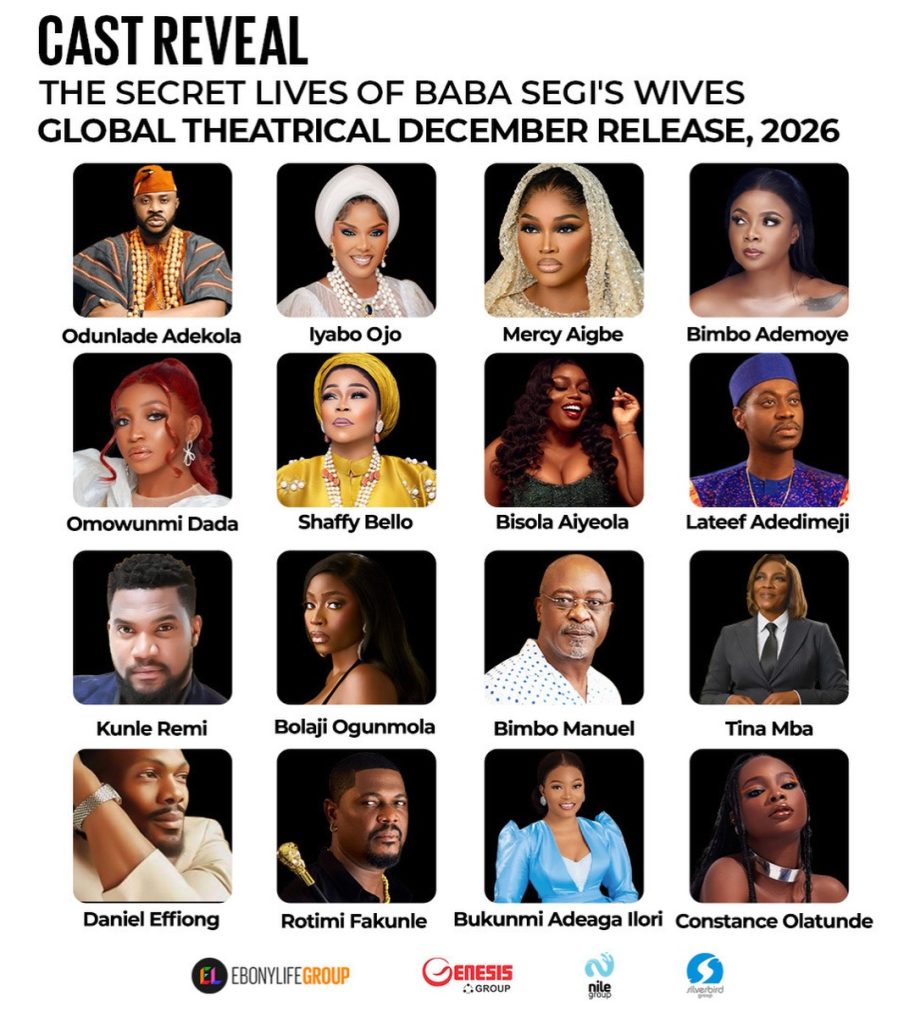
For EbonyLife, the stakes are personal and professional. The studio has not released a theatrical film in five years. This comeback, with director Daniel Oriahi (76, Battleground) helming an ensemble that includes Odunlade Adekola, Iyabo Ojo, Mercy Aigbe, Bimbo Ademoye, and Omowunmi Dada, needs to deliver both commercially and critically.
However, the implications extend beyond one studio’s comeback. Literary adaptations have historically struggled in Nollywood. The industry excels at original screenplays but often fumbles when translating celebrated novels, either oversimplifying complex narratives or getting so reverent that they forget cinema requires different storytelling muscles than prose.
Baba Segi’s Wives doesn’t allow for either approach. Shoneyin’s 2010 novel works because of its interiority—the private thoughts of wives who have built elaborate survival strategies, the unspoken dynamics that govern who speaks when and to whom. The book tackles polygamy, sexuality, mental health, and infertility while being improbably, wickedly funny. Critics called it “acutely funny” and “belly-achingly entertaining”—a tonal tightrope that makes adaptation treacherous.
Translating that to the screen requires trusting actors to convey what the novel tells us directly, and trusting audiences to read between the lines. It requires a production design that captures the visual language of status and rivalry in polygamous households. It requires wardrobe choices (handled by Yolanda Okereke) that communicate character without dialogue. It requires Temidayo Makanjuola’s production design to make domestic spaces feel both familiar and fraught.
Most importantly, it requires Daniel Oriahi and screenwriter Adze Ugah to find cinematic solutions to literary challenges.

The Template Question
If this adaptation succeeds, it could unlock something transformative for Nollywood. Nigeria has a rich tradition of contemporary literature—Chimamanda Ngozi Adichie, Teju Cole, Helon Habila, and Sefi Atta, whose work deserves cinematic treatment. Baba Segi’s Wives could prove the commercial and artistic viability of adapting celebrated Nigerian novels, rather than just mining them for intellectual property.
The 2013 stage adaptation offers precedent for hope. That production, which premiered at the Ake Books and Arts Festival before transferring to London’s Arcola Theatre, proved the story could work beyond the page. The Guardian called it “spectacular.” Theatre Box described it as “belly-achingly funny… theatre with a difference.” Director Femi Elufowoju Jr.‘s production featured live Yoruba music, choreography, and a bold theatrical style that embraced the novel’s humour without undercutting its darkness.
The film will need to find its own solutions, but the stage version demonstrated that audiences, Nigerian and international, were ready for this story in performance.
The International Equation
The film’s positioning suggests the team understands the story’s appeal extends beyond Nigeria. EbonyLife Cinemas is scheduled to open in London in Q2 2026, creating a direct pipeline for international audiences. The cast list has expanded to include Bolaji Ogunmola, Bimbo Manuel, Rotimi Fakunle, Bukunmi Adeaga Ilori (Kiekie), and Constance Olatunde—names that resonate across the diaspora.
Polygamy may be the novel’s subject, but the themes are universal: women navigating impossible systems, secrets that poison families, and the cost of survival. If the film captures that universality while remaining authentic to Nigerian cultural contexts, it could cross over in ways few Nollywood films have.
What Failure Would Mean
The flip side matters just as much. If Baba Segi’s Wives disappoints, if it simplifies the novel’s complexity, if the tonal balance tips into melodrama or loses the humour, if it feels more reverent than cinematic—the industry might conclude that literary adaptations aren’t worth the risk.
That would be a loss not just for filmmakers but for Nigerian literature itself. When celebrated novels remain unadapted, they lose potential audiences. Film has the power to send readers back to source material, to create new generations of literary fans, and to prove that Nigerian storytelling works across mediums.
There are nine months between now and December. Literary purists will debate casting choices and worry about which scenes made the cut. Film fans will dissect trailers and behind-the-scenes glimpses. The industry will watch to see if four major studios collaborating on a literary property becomes a template or a cautionary tale.
“This film represents a defining moment for African cinema,” said Genesis Group Managing Director Orazulike when the project was announced.
That’s not hyperbole. When The Secret Lives of Baba Segi’s Wives hits screens in December, it will not just be judged against the novel. It will be judged against what Nollywood is becoming: an industry confident enough to tackle its most celebrated literature and skilled enough to make it sing.
The question is not whether the film will be perfect. The question is whether it will be good enough to prove that Nigerian literature and Nigerian cinema can elevate each other, and that their union is worth investing in.
By Alade Oluwadamilola